Cubase Pro 15 Review: The Most Complete DAW for Modern Producers?
Cubase Pro 15 by Steinberg refines one of the most powerful digital audio workstations available today. With smarter workflow tools, deeper MIDI capabilities, and improved performance, it targets serious producers and professionals who demand precision. While it comes with a steep learning curve and premium price, Cubase Pro 15 rewards users with unmatched flexibility and control. In this review, we break down its features, performance, and real-world usability to determine whether it remains one of the best DAWs in 2026.

Introduction
Few digital audio workstations carry the legacy and depth of Cubase. Developed by :contentReference[oaicite:1]{index=1}, the software has long been a cornerstone of professional music production, shaping workflows across studios, film scoring environments, and bedroom setups alike.
With Cubase Pro 15, Steinberg isn’t reinventing the wheel—but it’s refining it in meaningful ways. This version focuses heavily on usability, smarter editing tools, and performance improvements, rather than flashy gimmicks. The result is a DAW that feels more mature, more responsive, and—crucially—more enjoyable to use.
Cubase Pro 15 is designed for serious producers, composers, mixing engineers, and sound designers. It’s not beginner-friendly out of the box, but for those willing to invest time, it offers one of the deepest and most flexible environments available today.
Pricing & Plans
Cubase lineup includes:
- Cubase Elements – Entry-level, limited features
- Cubase Artist – Mid-tier for semi-pro users
- Cubase Pro 15 – Full-featured flagship
Typical pricing (approximate):
- Elements: $99
- Artist: $329
- Pro 15: $579
Cubase Pro 15 sits firmly in the premium category. While the price may seem steep, it reflects the sheer depth of features, included instruments, and professional-grade tools. For working producers, it’s a long-term investment rather than a casual purchase.
Value Analysis:
Compared to competitors, Cubase Pro offers exceptional value if you rely heavily on MIDI composition, scoring tools, and advanced editing. However, casual users may find it overkill.
System Requirements
Windows:
- Windows 10/11 (64-bit)
- Intel Core i5 / AMD equivalent
- 8GB RAM (16GB recommended)
Mac:
- macOS 12 or later
- Apple Silicon supported (native optimization)
- 8GB RAM minimum
Cubase Pro 15 runs efficiently on modern systems, especially with native Apple Silicon support. For larger projects with orchestral libraries or heavy plugin chains, 16GB RAM or more is strongly recommended.
Interface & User Experience
At first glance, Cubase Pro 15 retains its familiar layout—but subtle refinements make a noticeable difference. The interface feels cleaner, more responsive, and less cluttered than previous versions.
Highlights:
- Improved workspace organization
- Better scaling for high-resolution displays
- Streamlined tool access
The learning curve is still steep. Unlike simpler DAWs, Cubase doesn’t hold your hand. However, once mastered, the workflow becomes incredibly efficient.
Navigation is logical but dense. Advanced users will appreciate the depth, while newcomers may feel overwhelmed initially.
Core Features Breakdown
1. Advanced MIDI Editing (Still Best-in-Class)
Cubase continues to dominate in MIDI capabilities. The Key Editor, Logical Editor, and expression mapping tools are unmatched for composers.
2. New Workflow Enhancements
- Smarter track management
- Improved automation editing
- Faster rendering and export options
3. Audio Editing & Comping
Cubase Pro 15 refines comping workflows, making vocal editing smoother and faster. AudioWarp and VariAudio remain powerful tools for pitch correction and timing.
4. MixConsole Improvements
The MixConsole now feels more responsive and customizable, allowing engineers to manage large sessions more efficiently.
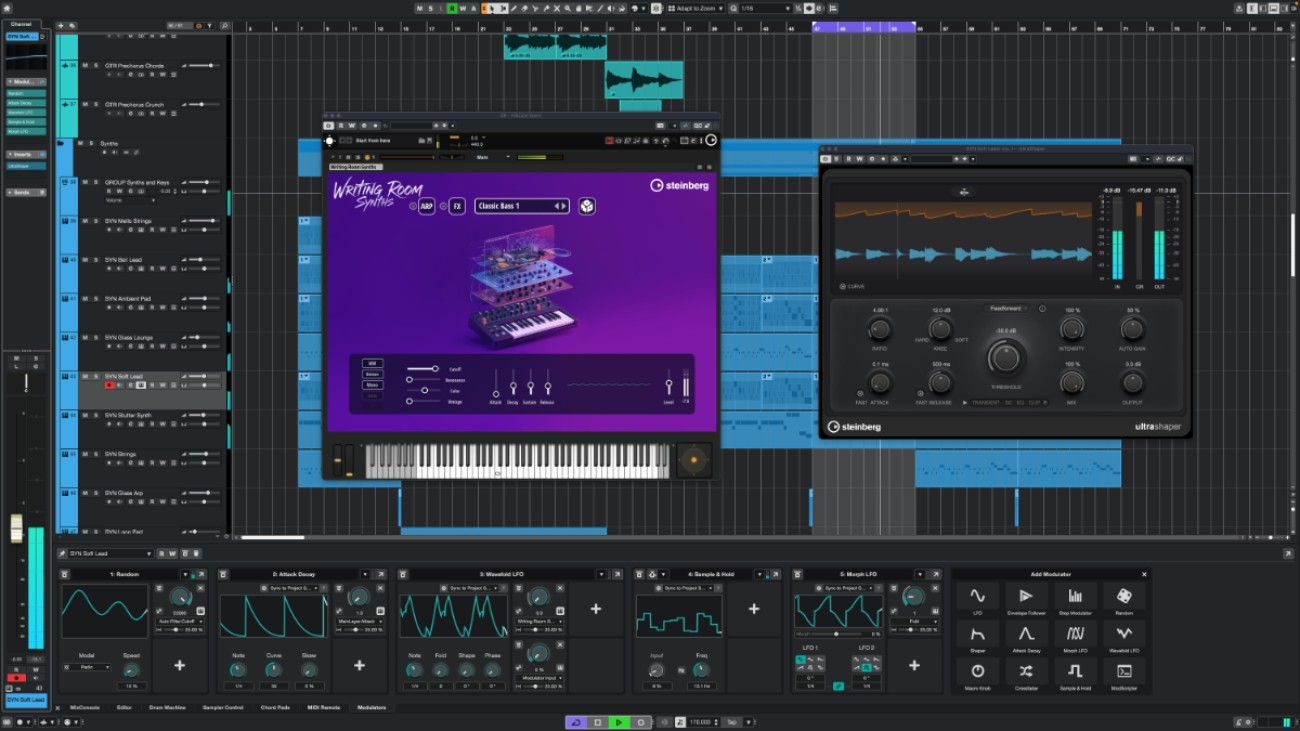
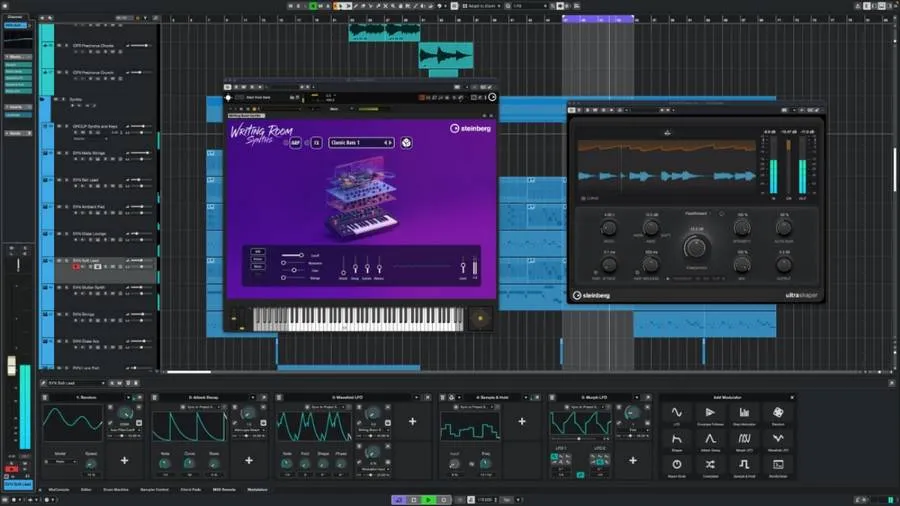
5. Enhanced Modulation System
One of the standout additions is a more flexible modulation system, enabling dynamic parameter control across instruments and effects.
6. Dolby Atmos Integration
Cubase Pro continues to support immersive audio workflows, making it a strong choice for film and spatial audio production.
Performance & Stability
Cubase Pro 15 delivers excellent performance across both Windows and macOS systems.
- Fast project loading times
- Improved CPU optimization
- Stable handling of large sessions
In real-world use, the DAW remains stable even under heavy workloads. Crashes are rare, and plugin handling is robust.
Built-in Tools & Plugins
Cubase Pro 15 includes an impressive suite of instruments and effects:
- HALion Sonic – Versatile sampler
- Groove Agent – Drum production powerhouse
- Retrologue – Analog-style synth
- SpectraLayers integration
Effects are equally strong, covering everything from EQ and compression to creative modulation and spatial processing.
The quality rivals many third-party plugins, reducing the need for additional purchases.
Workflow & Productivity
Cubase excels in structured workflows. Features like Track Presets, Control Room, and advanced routing make complex projects manageable.
Compared to competitors, Cubase feels more “engineering-focused” than performance-oriented DAWs.
Productivity strengths:
- Highly customizable shortcuts
- Logical automation tools
- Powerful project organization
Pros & Cons
Pros:
- Industry-leading MIDI tools
- Deep feature set
- Excellent audio editing
- Strong built-in plugins
- Professional-grade mixing environment
Cons:
- Steep learning curve
- Expensive compared to competitors
- Interface still complex for beginners
Comparison
Compared to :contentReference[oaicite:2]{index=2}, Cubase offers more advanced MIDI and cross-platform flexibility. However, Logic is more affordable and beginner-friendly.
Against :contentReference[oaicite:3]{index=3}, Cubase is more suited for linear production and mixing, while Ableton excels in live performance and loop-based creation.
Cubase sits firmly as a “precision tool” rather than a creative sketchpad.
Final Verdict
Cubase Pro 15 is not trying to be trendy—it’s trying to be perfect. And in many ways, it gets very close.
This is a DAW built for professionals who demand control, depth, and reliability. It’s not the easiest to learn, but it rewards mastery like few others.
Who should buy it:
- Professional producers
- Film composers
- Mixing engineers
Who should skip it:
- Beginners
- Casual hobbyists
Rating: 9/10
Cubase Pro 15 remains one of the most complete DAWs available today.
- Industry-leading MIDI capabilities
- High-quality built-in plugins & instruments
- Professional mixing & mastering tools
- Highly customizable workflow
- Premium price point
- Steeper learning curve for beginners
- Requires powerful PC for optimal performance

Melodyne vs Auto-Tune: Choosing the Right Workflow for Vocal Production
At a glance, pitch correction might appear purely technical—an effort to bring notes into alignment. Yet in practice, it often reflects a deeper creative decision: how much of the
-
By: Adrian Vexley
Best DAW Software 2026: Top 7 Picks for Beginners & Music Producers
Choosing the right DAW in 2026 can completely change how you make music. The wrong software slows you down—while the right one can turn ideas into finished tracks in minutes. In
-
By: Ardi Pratama

Ableton Live Review 2026: Still the Most Creative DAW?
Ableton Live continues to stand as one of the most forward-thinking digital audio workstations available today. Developed by Ableton, it blends music production and live
-
By: Adrian Vexley
Logic Pro Review (2026): Apple’s Flagship DAW Still Dominates Creative Music Production
Logic Pro by Apple Inc. remains one of the most powerful and accessible digital audio workstations available today. Designed exclusively for macOS, it blends professional-grade
-
By: Adrian Vexley

Ableton Live vs FL Studio (2026): Full Comparison, Pros & Cons, and Which DAW Is Better?
Stuck choosing between Ableton Live and FL Studio? You’re not alone. These two DAWs dominate modern music production—but they’re built for very different workflows. One is all
-
By: Adrian Vexley
L4 Ultramaximizer Review — Still Relevant or Just Old News?
Alright, let’s talk about the Waves Audio L4 Ultramaximizer. This plugin has been around for quite a while. Not exactly “vintage,” but in plugin years… yeah, it’s getting there.
-
By: Ardi Pratama