Xfer Records Serum 2 Review – Features, Pros, Cons & Is It Worth It in 2026?
Xfer Records Serum 2 is a next-generation hybrid synthesizer that expands beyond classic wavetable design. With new engines like granular, spectral, and multisample synthesis, along with advanced routing and a redesigned FX section, it offers unmatched flexibility for modern music production. Known for its clean sound quality and intuitive visual workflow, Serum 2 is suitable for both beginners and professional sound designers. This review covers its features, performance, pros, cons, and overall value to help you decide if it’s the right plugin for your setup.

Introduction
In the world of digital music production, few plugins have achieved the level of recognition and trust as Serum by Xfer Records. Known for its pristine sound quality and intuitive visual workflow, Serum quickly became a staple for producers across genres—from EDM and hip-hop to film scoring and sound design.
With the release of Serum 2, expectations are higher than ever. This isn’t just a minor update, but a significant leap forward that transforms the plugin into a full hybrid synthesis environment. By introducing new engines like granular, spectral, and multisample synthesis, along with a redesigned routing system and expanded effects, Serum 2 aims to push creative boundaries even further.
So, does Serum 2 truly redefine what a modern software synthesizer can do, or is it simply an enhanced version of an already iconic tool? In this review, we’ll explore its features, performance, and overall value to help you decide if it’s worth adding to your setup.
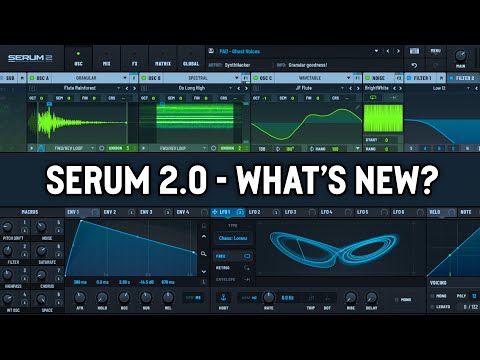
What is Serum 2?
Serum 2 is a next-generation software synthesizer developed by Xfer Records, designed to deliver advanced sound design through a powerful hybrid synthesis engine. While the original Serum focused primarily on wavetable synthesis, Serum 2 expands its capabilities by integrating multiple synthesis methods—including granular, spectral, and sample-based engines—within a single plugin.
At its core, Serum 2 is built for flexibility and precision. It allows users to create, manipulate, and visualize sound in real time, making complex sound design more intuitive and accessible. With its enhanced oscillator system, advanced modulation options, and fully redesigned routing and effects structure, it functions not just as a synth, but as a complete sound design environment.
Whether you’re crafting aggressive basslines, evolving textures, or detailed cinematic sounds, Serum 2 provides the tools to shape audio with a high level of control while maintaining the clean, high-quality sound engine that made the original version so popular.
Why Serum?
In a market filled with powerful synthesizers, Serum by Xfer Records has remained a top choice for years—not because of hype, but because of how well it balances power, clarity, and usability. With Serum 2, that reputation becomes even stronger.
One of the biggest reasons producers choose Serum is its real-time visual feedback system. Unlike many synths that rely heavily on abstract controls, Serum shows exactly what’s happening to your sound. From wavetable movement to modulation behavior, everything is displayed clearly, helping users understand sound design on a deeper level. This makes it especially valuable for both learning and precision work.
Another key factor is its industry-leading sound quality. Serum uses high-resolution oscillators and advanced interpolation methods, resulting in extremely clean and detailed audio. Whether you’re designing sharp, aggressive basses or smooth, evolving pads, the sound remains crisp, with minimal digital artifacts—even under heavy processing.
Serum is also known for its intuitive workflow. The drag-and-drop modulation system allows you to assign LFOs, envelopes, and macros instantly, while the modulation matrix provides deeper control when needed. This dual approach makes it accessible for beginners while still offering the depth professionals expect.
Flexibility is another major advantage. With Serum 2, the synth evolves into a true hybrid powerhouse, combining wavetable, granular, spectral, and sample-based synthesis in one environment. Add to that a redesigned mixer, advanced routing options, and a significantly expanded effects section, and you get a tool that can handle nearly any sound design task without relying on external plugins.
Finally, Serum benefits from a massive ecosystem. There are thousands of presets, third-party wavetables, and tutorials available, making it easy to learn, expand, and integrate into any production workflow.
In short, Serum stands out because it doesn’t force you to choose between quality, control, and ease of use—it delivers all three at a professional level, making it one of the most reliable and future-proof synthesizers available today.
Multiple Oscillator Types
One of the most important reasons why Serum 2 feels like a true next-generation synth is its completely expanded oscillator system. Developed by Xfer Records, this new approach removes the limitation of relying on a single synthesis method and instead gives you multiple sound engines inside one instrument.
In practical terms, this means you’re no longer just “designing a sound”—you’re building it from different synthesis worlds at the same time.
Wavetable Oscillator (Still the Core, But Better)
Serum’s identity has always been rooted in wavetable synthesis, and that hasn’t changed—but it has improved. The wavetable engine now feels smoother, more detailed, and more responsive, especially when scanning through tables or applying warp modes.
You still get the clean, sharp sound Serum is known for, but with better interpolation and more control over harmonics. For electronic music producers, this remains the go-to engine for:
- Punchy basslines
- Bright, cutting leads
- Modern digital textures
It’s familiar, but definitely more refined.
Granular Oscillator (For Movement and Atmosphere)
This is where things start to get interesting. The granular engine allows you to take any audio and split it into tiny pieces (grains), then manipulate how those grains behave over time.
Instead of playing a sound normally, you can stretch it, scatter it, reverse it, or create evolving motion that constantly changes. The result is:
- Ambient textures
- Cinematic soundscapes
- Glitchy or experimental effects
What makes it powerful is how easy it is to control visually—so even complex results don’t feel overwhelming.
Sample Oscillator (Direct Audio Integration)
The sample oscillator brings a more straightforward but incredibly useful feature: the ability to load your own audio directly into the synth.
This might sound simple, but in practice it opens a lot of creative doors. You can:
- Layer real-world sounds with synthetic elements
- Turn vocals into playable instruments
- Add texture and character to otherwise clean patches
It’s especially useful for producers who like blending organic and digital sounds.
Multisample Engine (More Realistic Instruments)
With multisample support (including SFZ), Serum 2 moves closer to sampler territory. Instead of one sample stretched across the keyboard, you can map different samples across keys and velocities.
This allows for:
- More realistic instrument emulations
- Dynamic playing response
- Detailed layering across the keyboard
It’s a big step forward, especially for composers and producers who want both synthesis and realism in one plugin.
Spectral Oscillator (Advanced Sound Shaping)
The spectral engine is easily the most experimental part of Serum 2. Instead of working with waveforms or samples directly, it focuses on the frequency content of a sound.
This lets you reshape harmonics in ways that feel almost surgical. You can create:
- Metallic, futuristic tones
- Evolving harmonic textures
- Unique timbres that don’t sound like traditional synths
It’s not something every beginner will use right away, but for advanced sound design, it’s incredibly powerful.
Why This Changes Everything
The real strength of Serum 2 isn’t just having these oscillator types—it’s the ability to combine them inside a single patch.
You could, for example:
- Use a wavetable for the main body
- Add granular layers for movement
- Blend in samples for texture
- Shape everything further with spectral processing
All of this happens inside one interface, without needing multiple plugins.
That’s what makes Serum 2 stand out—it’s no longer just a wavetable synth. It’s a flexible sound design ecosystem where different synthesis methods work together seamlessly.
Before We Dive Into the Key Features
Before jumping into the full list of features, it’s worth understanding what makes Serum 2 by Xfer Records feel different right from the start.
This isn’t the kind of plugin where you need hours just to get a decent sound. Within minutes of opening Serum 2, you can already shape something usable—and with a bit more tweaking, something truly unique. That’s because everything is designed to feel immediate, visual, and responsive, even when the engine behind it is incredibly deep.
At the same time, the depth is always there when you need it. You can keep things simple with basic oscillators and a few modulations, or go all-in with complex routing, layered synthesis engines, and detailed processing. It scales naturally with your workflow, whether you’re sketching ideas or crafting highly detailed sounds from scratch.
This balance between simplicity and power is what defines Serum 2. And with that in mind, let’s take a closer look at the features that make it one of the most advanced synths available today.
Key Features
Serum 2 by Xfer Records isn’t just packed with features—it’s designed so each one actually improves your workflow and expands your creative possibilities. Instead of adding complexity for the sake of it, every upgrade feels purposeful and usable in real-world production.
Here’s a deeper look at the core features that define Serum 2:
Advanced Mixer & Routing System
One of the biggest changes in Serum 2 is the introduction of a fully redesigned mixer. Each oscillator, noise source, and sub can now be treated as its own channel.
This gives you:
- Independent volume and panning per sound source
- Flexible routing to filters and effects
- Parallel processing and bus-style workflows
In practice, this means you can build complex layered sounds inside one patch, without needing external mixing tools. It feels closer to working inside a DAW, but still fast and intuitive.
Dual Filters with Flexible Routing
Serum 2 introduces two fully independent filters, and more importantly, the ability to route signals between them in multiple ways.
You can:
- Run filters in series for detailed shaping
- Use them in parallel for blending tones
- Assign different oscillators to different filters
Combined with new filter types and improved control, this gives you much more precision when sculpting your sound’s tone and character.
Powerful Modulation System
Modulation has always been one of Serum’s strengths, and here it’s even more refined.
You get:
- Multiple LFOs with custom shapes
- Flexible envelopes
- Macro controls for performance
- A detailed modulation matrix for fine-tuning
The drag-and-drop workflow is still there, making it incredibly fast to assign modulation. But when you want deeper control, the matrix gives you surgical precision over every parameter.
Expanded Effects Section
The FX section in Serum 2 is no longer just an add-on—it’s a serious sound design tool.
New and improved features include:
- Convolution reverb for realistic space
- Multi-band processing for detailed control
- Mid/side processing for stereo shaping
- Multiple FX buses for advanced routing
This allows you to fully design, polish, and finalize sounds without leaving the plugin.
Enhanced Wavetable Editor
The wavetable editor has always been a highlight, and now it’s even more powerful.
You can:
- Draw and manipulate waveforms visually
- Import and transform audio into wavetables
- Use advanced warp modes and spectral tools
- Generate new tables with intelligent processing
It remains one of the most intuitive and powerful wavetable editors available today.
Improved Preset Browser
Finding sounds is faster and more organized than before.
Enhancements include:
- Better tagging and search system
- Faster loading times
- Cleaner layout for browsing
This makes it easier to stay in the creative flow without constantly digging through menus.
Performance & Optimization
Despite its expanded capabilities, Serum 2 is optimized to remain efficient.
- Smart CPU handling for complex patches
- High-quality rendering without unnecessary load
- Scalable performance depending on your setup
Of course, very heavy patches can still be demanding, but overall performance feels balanced for such a powerful synth.
Why These Features Matter
What makes these features stand out isn’t just their individual power—it’s how well they work together.
You’re not jumping between different plugins or fighting complicated menus. Everything is integrated into a single environment where sound design, mixing, and processing happen seamlessly.
That’s what makes Serum 2 special—it doesn’t just give you more tools, it gives you a better way to use them.
What’s New in Serum 2?
At first glance, Serum 2 by Xfer Records might look like a refined version of the original—but once you start exploring it, the differences become impossible to ignore. This isn’t just an update; it’s a complete overhaul of the synth’s architecture, workflow, and creative potential.
Here are the most important upgrades that truly define Serum 2:
Multi-Engine Synthesis System
The biggest change is the move from a single wavetable engine to a multi-engine architecture. Serum 2 now includes wavetable, granular, spectral, sample, and multisample synthesis—all inside one plugin.
This completely changes how you design sounds. Instead of relying on one method, you can layer and blend different synthesis types in a single patch, opening up far more creative possibilities.
More Oscillators & Sound Sources
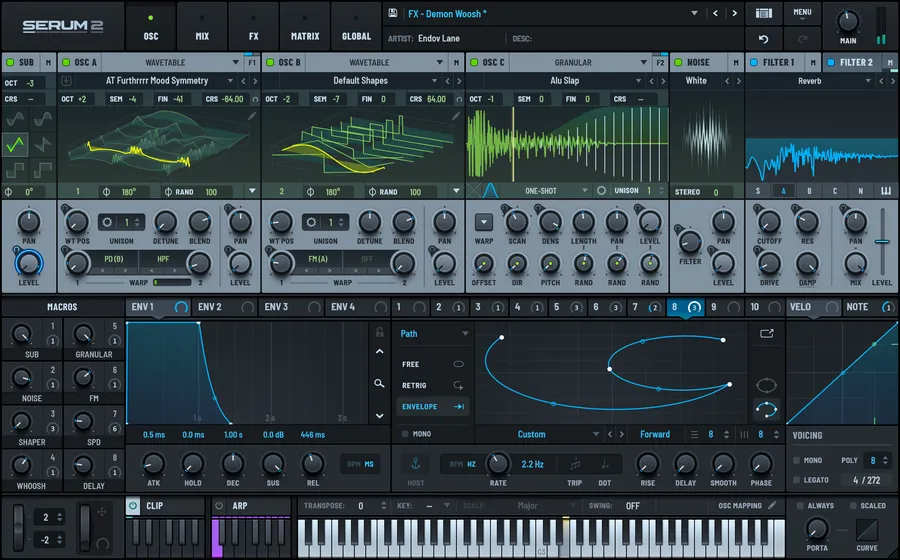
Serum 2 introduces a third main oscillator, giving you up to five sound sources including sub and noise.
Each oscillator can run different synthesis modes, allowing complex layering that simply wasn’t possible before.
Brand-New Mixer & Routing System
One of the most game-changing additions is the new mixer tab, which lets you route oscillators, filters, and effects with much more freedom.
- Independent channel control for each sound source
- Flexible signal routing (like a mini DAW)
- Parallel and multi-bus processing
This transforms Serum into a much more modular and production-ready environment.
Completely Redesigned FX Section
The effects section has been heavily upgraded with:
- Multiple FX buses (FX1, FX2, and master chain)
- New effects like convolution reverb and frequency shifter
- Advanced routing and processing options
You can now process different layers separately, making the FX section feel like a professional mixing rack inside the synth.
Dual Filters & New Filter Types
Serum 2 now includes dual filters with flexible routing options (series or parallel), plus new filter models and custom shapes.
This gives you much more control over tone shaping and sound layering.
Expanded Modulation System
Modulation has been pushed even further with:
- Up to 10 LFOs
- Improved envelopes and macro controls
- New modulation modes (including path and chaos styles)
- More detailed modulation matrix
The result is deeper control without sacrificing the fast drag-and-drop workflow Serum is known for.
Built-in Arpeggiator & Clip Sequencer
A major addition is the arpeggiator and clip sequencer, turning Serum 2 into more than just a synth—it becomes a performance and composition tool.
You can now:
- Create rhythmic patterns
- Build sequences directly inside the plugin
- Add movement without external MIDI tools
Improved Browser & Workflow Enhancements
Serum 2 introduces several quality-of-life improvements:
- Fully redesigned preset browser
- Faster navigation and sound previewing
- Full undo/redo functionality
- High-resolution, scalable UI
These changes make the overall experience smoother and more efficient.
Massive Content Upgrade
Out of the box, Serum 2 includes:
- Hundreds of new presets
- Expanded wavetable library
- More ready-to-use sounds
This makes it immediately useful, whether you design sounds from scratch or rely on presets.
Backward Compatibility + Free Upgrade
One of the most user-friendly aspects:
- Full compatibility with Serum 1 presets
- Free upgrade for existing users
This ensures you don’t lose your old projects while gaining all the new features.
The Big Picture
What makes these updates truly impressive isn’t just the number of new features—it’s how they come together.
Serum 2 doesn’t just add more tools. It redefines how those tools interact, turning a once “wavetable-focused synth” into a complete sound design ecosystem that can handle synthesis, layering, processing, and even sequencing—all in one place.
That’s what makes Serum 2 feel less like a version update… and more like a new standard for modern software synthesizers.
Sound Quality & Performance
After spending time properly testing Serum 2 by Xfer Records across different types of patches—from simple leads to complex multi-engine sound design—one thing becomes immediately clear: this synth is built for precision, clarity, and consistency.
Sound Quality (Real-World Use)
The first thing you notice is how clean and controlled everything sounds, even when you push it hard.
- The oscillators feel extremely crisp and detailed, especially when working with high-frequency content or sharp transients.
- Wavetable scanning is noticeably smoother, thanks to improved interpolation, which reduces unwanted stepping or digital harshness.
- Even with heavy modulation, distortion, or FM, the sound rarely collapses into mud—it stays defined and usable in a mix.
In practical terms, this means:
- Bass sounds hit hard but stay tight
- Leads cut through without sounding brittle
- Pads remain smooth even with complex movement
What stands out most is the “sweet spot” factor—it’s actually difficult to make Serum 2 sound bad. Even extreme processing tends to stay musical rather than chaotic.
Compared to other modern synths, Serum 2 easily sits at the top tier. In fact, it has been rated among the best in sound quality, delivering rich, clean tones while maintaining clarity across all synthesis modes.
Consistency Across Different Engines
What surprised me the most during testing is how consistent the quality is across all oscillator types.
- Granular engine → smooth, atmospheric, not overly noisy
- Spectral engine → rich harmonic detail without sounding thin
- Sample engine → clean playback with solid integration into synthesis
Usually, hybrid synths sacrifice quality in one area—but Serum 2 keeps everything balanced and polished, no matter which engine you use.
Effects & Final Sound Output
The upgraded FX section plays a huge role in the final sound.
- Convolution reverb adds realistic depth without washing out the signal
- Distortion and filtering feel more refined and controllable
- Multi-band processing helps shape sounds directly inside the plugin
In many cases, I found that sounds coming out of Serum 2 were already mix-ready without external plugins, which is a big advantage in real production workflows.
Performance & CPU Usage
Now for the honest part—performance.
Serum 2 is efficient for what it does, but it’s not a lightweight plugin, especially when you start stacking features.
From testing:
- Simple patches → very light, barely noticeable CPU usage
- Moderate patches (2–3 oscillators + FX) → stable and manageable
- Heavy patches (granular + spectral + multiple FX chains) → can become CPU intensive
This aligns with general observations: performance largely depends on patch complexity rather than the synth itself.
However, the optimization is solid:
- No random spikes or instability
- Predictable CPU scaling
- Works smoothly in most modern DAWs
Real Production Experience
In an actual project scenario, Serum 2 feels reliable and predictable, which is exactly what you want.
- You can stack layers without worrying about sudden degradation
- Sounds translate well across different systems
- What you hear while designing is very close to the final result in the mix
It’s especially strong for:
- EDM and bass-heavy genres (tight low-end control)
- Cinematic textures (wide, detailed stereo image)
- Modern sound design (clean but flexible tone shaping)
Final Take on Sound & Performance
Serum 2 doesn’t just sound good—it sounds finished.
It delivers:
- High-definition clarity
- Consistent quality across all synthesis types
- Reliable performance that scales with your project
Yes, it can be CPU-heavy if you push it—but that’s the trade-off for having this level of power inside a single plugin.
And honestly?
Once you hear what it can do, it feels like a fair trade.
User Interface & Workflow
One of the reasons Serum became so popular in the first place—and why Serum 2 by Xfer Records continues that legacy—is its exceptionally well-designed interface and workflow. After spending real time using it, it’s clear that this is not just a powerful synth—it’s a thoughtfully designed tool that respects your creative flow.

Familiar, But Smarter Layout
If you’ve used Serum before, Serum 2 will feel instantly familiar. The layout hasn’t been completely reinvented—and that’s actually a good thing.
- Oscillators remain at the top
- Modulation (LFOs, envelopes) stays in the lower section
- FX and routing are clearly separated
The interface is slightly expanded to accommodate new features like the third oscillator and dual filters, but everything still feels logically placed and easy to navigate.
You don’t waste time searching for things—it’s all where you expect it to be.
Visual Workflow (Still One of the Best)
What really stands out in daily use is how visual everything is.
- Wavetables animate in real time
- Modulation paths are clearly shown
- LFO shapes are editable directly on screen
This makes sound design feel less like guessing and more like seeing what you’re doing. Even complex modulation setups remain understandable, which is a huge advantage compared to more “menu-heavy” synths.
Drag-and-Drop Modulation (Fast & Addictive)
The workflow is incredibly fast thanks to the drag-and-drop modulation system.
- Drag an LFO → drop it on any parameter
- Instantly see modulation depth
- Adjust it visually without opening menus
This alone speeds up sound design massively. Instead of setting up routing manually, you’re just experimenting in real time, which keeps creativity flowing.
Improved Routing & Mixer Visualization
One of the biggest workflow upgrades in Serum 2 is how routing is handled.
- The new mixer tab shows signal flow clearly
- You can route oscillators, filters, and FX visually
- Parallel and bus processing feels natural
Instead of guessing how audio flows, you can actually see and control it like a mini DAW, making complex patches much easier to manage.
New Preset Browser (Huge Quality-of-Life Upgrade)
The updated preset browser is a big deal—especially if you use lots of sound packs.
- Search by name, category, or tags
- Filter sounds (bass, lead, pad, etc.)
- Mark favorites and organize presets
This makes finding sounds way faster and less frustrating, especially in large libraries.
Workflow for Different Skill Levels
What makes Serum 2 special is how it adapts to your level:
- Beginner → load a preset, tweak a few knobs, done
- Intermediate → build patches with modulation and FX
- Advanced → deep routing, multi-engine layering, full sound design
You’re never forced into complexity, but it’s always there when you want it.
Performance Features That Improve Workflow
Some smaller details that make a big difference:
- Undo/redo (huge for experimentation)
- Smooth UI scaling for high-res screens
- MPE support for expressive playing
- Faster browsing and loading times
All of these contribute to a workflow that feels modern and responsive, not clunky or outdated.
Real-World Workflow Experience
After actually using it in projects, Serum 2 feels like a tool that gets out of your way.
You don’t feel slowed down by menus or technical barriers. Instead:
- Ideas come together quickly
- Tweaks happen instantly
- Complex sounds don’t feel overwhelming
Even when building advanced patches, the interface keeps everything clear and under control.
Final Take on UI & Workflow
Serum 2 doesn’t just add features—it improves how you interact with them.
It delivers:
- A clean, familiar layout
- One of the best visual workflows in any synth
- Fast, intuitive modulation and routing
- A smoother, more efficient creative process
In short, it’s the kind of interface that makes you want to keep designing sounds, not fight the software.
Pros and Cons
After spending serious time working with Serum 2 by Xfer Records in real production scenarios—not just testing presets, but actually building patches, layering sounds, and pushing the engine—it becomes clear that this is an incredibly powerful synth… but not without a few trade-offs.
✅Pros
Exceptional Sound Quality (Top-Tier)
Serum 2 still leads when it comes to clean, high-definition sound. The oscillators are sharp without being harsh, and even aggressive patches maintain clarity.
From experience:
- Bass stays tight and controlled
- High frequencies don’t get brittle
- Complex sounds remain mix-friendly
It’s one of the few synths where you rarely need to “fix” the sound later.
True Hybrid Sound Design Power
This is no longer just a wavetable synth. With granular, spectral, and sample-based engines, Serum 2 becomes a complete sound design environment.
In practice:
- You can build entire layered sounds in one instance
- No need to stack multiple plugins
- Great for both electronic and cinematic work
This flexibility is a huge upgrade over Serum 1.
Workflow That Actually Speeds You Up
The drag-and-drop modulation, visual feedback, and clean layout make a real difference.
During use:
- Ideas come together quickly
- Modulation takes seconds, not minutes
- You spend more time creating, less time setting up
It’s one of the fastest synths to work with, even at a professional level.
Built-in FX That Are Actually Usable
Unlike many synths where FX feel like an afterthought, Serum 2’s effects are production-quality.
- Convolution reverb adds real depth
- Distortion and filters are precise
- Multi-band processing is genuinely useful
In many cases, sounds come out nearly mix-ready.
Visual Learning Curve (Beginner to Pro Friendly)
Even with all its depth, Serum 2 remains approachable.
- Beginners can start with presets and simple tweaks
- Advanced users can dive into complex routing and modulation
It scales naturally with your skill level, which is rare for a synth this powerful.
Backward Compatibility & Ecosystem
- Loads Serum 1 presets perfectly
- Massive library of third-party sounds
- Tons of tutorials and community support
This makes it a safe long-term investment.
❌ Cons
CPU Usage Can Get Heavy
Let’s be honest—Serum 2 is not lightweight.
In real projects:
- Simple patches → no issue
- Complex patches (granular + FX + layering) → noticeable CPU load
If you stack multiple instances, you’ll need a solid system or be ready to freeze/render tracks.
Can Be Overkill for Simple Tasks
If you just need:
- Basic analog sounds
- Simple plucks or pads
Serum 2 might feel like too much synth for the job. There are lighter plugins that can get there faster with less setup.
Depth Can Become Complexity
While the interface is clean, the sheer amount of features can become overwhelming.
From experience:
- It’s easy to go too deep into tweaking
- You can lose time perfecting small details
- Not ideal if you want ultra-fast, minimal workflow
It rewards deep work—but demands focus.
Not the Most CPU-Optimized Hybrid Synth
Compared to some newer synths optimized for performance, Serum 2 can feel slightly heavier when pushed to extremes.
It’s stable and predictable—but not the most efficient in its class when doing very complex processing.
Final Professional Take
Serum 2 is the kind of tool that rewards serious producers.
Strengths:
- Industry-leading sound quality
- Deep and flexible sound design
- Fast, intuitive workflow
Trade-offs:
- Higher CPU usage
- Potentially overkill for simple needs
- Depth that can slow you down if you're not focused
If you’re the type of producer who likes to shape every detail of your sound, Serum 2 is easily one of the best synths available today.
But if you prefer quick, minimal setups—this might feel like bringing a spaceship to a bike ride.
And honestly?
For most professionals… that’s exactly why it’s worth it.
Who Should Use Serum 2?
After working extensively with Serum 2 by Xfer Records, it’s clear that this isn’t a “one-size-fits-all” plugin—it’s built for specific types of creators who want control, flexibility, and high-end sound design capabilities.
Here’s who will benefit the most:
EDM & Electronic Music Producers
If you produce EDM, future bass, dubstep, trap, or house, Serum 2 is almost a perfect fit.
Why?
- Tight, punchy low-end for bass music
- Bright, cutting leads that sit well in a mix
- Advanced modulation for movement and energy
In real use, it excels at modern electronic sounds that need to feel clean, powerful, and detailed.
Sound Designers (Beginner to Advanced)
Serum 2 is a dream tool for sound design.
- Beginners → can learn synthesis visually
- Intermediate → build complex patches بسهولة
- Advanced → push into granular, spectral, and hybrid design
If you enjoy creating sounds from scratch, this plugin gives you almost unlimited creative depth.
Film, Game & Ambient Composers
With the addition of granular and spectral engines, Serum 2 is no longer limited to electronic genres.
It’s now excellent for:
- Cinematic textures
- Atmospheres and soundscapes
- Evolving ambient layers
In testing, it performs surprisingly well for emotional, organic, and experimental sounds, not just aggressive synth tones.
Producers Who Want “All-in-One” Sound Design
If you prefer working inside a single plugin rather than stacking multiple tools, Serum 2 is ideal.
- Synthesis + layering + FX in one place
- Minimal need for external processing
- Faster workflow once you master it
It’s especially useful in professional workflows where efficiency matters.
Producers Who Like Control (Not Preset-Only Users)
Serum 2 is best suited for people who:
- Like tweaking parameters
- Enjoy shaping every detail
- Don’t mind diving deep into sound design
If you just want to scroll presets and move on, you’ll still benefit—but you won’t unlock its full potential.
Who Might NOT Need Serum 2?
To be honest, it’s not for everyone.
It may not be ideal if:
- You only need simple analog-style sounds
- You prefer ultra-lightweight plugins
- You don’t want to spend time learning deeper features
There are simpler tools that can get basic sounds faster with less effort.
Final Fit Summary
Serum 2 is best for creators who want:
- Professional sound quality
- Deep, flexible sound design
- A modern, visual workflow
If that sounds like your style, Serum 2 won’t just fit into your setup—it’ll likely become one of your main creative tools.
Pricing & Value
When it comes to pricing, Serum 2 by Xfer Records sits in the premium plugin category—but with a value proposition that’s hard to ignore once you understand what you’re getting.
Pricing Breakdown
- Full Price: $249 USD
- Intro Price (launch period): ~$189 USD
- Rent-to-Own Option: $9.99/month (via Splice)
- Upgrade for Serum 1 Users: Free
Real Value (From a Producer’s Perspective)
After actually using it, Serum 2 doesn’t feel like you’re buying “just another synth”—it feels like you’re investing in a complete sound design system.
Here’s why the value stands out:
1. Free Lifetime Updates (Huge Advantage)
Unlike many plugins that charge for major upgrades, Serum 2 comes with lifetime free updates.
From a long-term perspective, this is massive:
- No upgrade fees
- Continuous improvements over time
- Future-proof investment
This alone already puts it ahead of many competitors.
2. Free Upgrade for Existing Users
This is honestly one of the most user-friendly moves in the plugin industry.
- If you already own Serum 1 → you get Serum 2 completely free
- No paid upgrade, no “lite version,” no catch
That’s extremely rare—and adds serious trust to the brand.
3. Replaces Multiple Plugins
In real workflow usage, Serum 2 can replace:
- A wavetable synth
- A granular engine
- A sampler (basic level)
- Several FX plugins
So instead of buying multiple tools, you’re getting one powerful all-in-one solution.
That makes the $249 price tag feel much more reasonable.
4. Rent-to-Own = Beginner Friendly
The $9.99/month option is a big deal for newer producers.
- No large upfront cost
- You still get the full version
- You own it after completing payments
This lowers the barrier to entry significantly, especially for bedroom producers.
5. Long-Term ROI (Return on Investment)
From a professional standpoint:
- You’ll likely use it for years
- It works across multiple genres
- It stays relevant due to updates
Compared to plugins that get outdated quickly, Serum 2 feels like a long-term tool, not a short-term purchase.
Is It Expensive?
Let’s be real—$249 isn’t cheap, especially for beginners.
But based on real-world usage:
- It competes with (and often replaces) multiple paid plugins
- It delivers top-tier sound quality
- It offers continuous updates without extra cost
So while the entry price is high, the value per dollar is actually very strong.
Final Verdict on Pricing & Value
Serum 2 hits a rare balance:
- Premium price → yes
- Premium value → absolutely
It’s best described as:
A high upfront investment that pays off long-term
If you’re serious about music production or sound design, Serum 2 isn’t just worth the price—it’s one of the smartest investments you can make in your plugin collection.
After exploring everything Serum 2 by Xfer Records has to offer—from its expanded synthesis engines and powerful routing system to its refined workflow and sound quality—it becomes clear that this isn’t just another plugin release.
What really stands out is how complete the experience feels. You’re not jumping between multiple tools or relying heavily on external processing. Instead, Serum 2 gives you a space where sound design, shaping, and finishing can all happen in one place—without breaking your creative flow.
At the same time, it doesn’t try to simplify things too much. The depth is real, and you can feel it the more you use it. But importantly, that complexity never feels forced. You can go as deep as you want, or keep things simple and still get great results.
It’s this balance—between power and usability, depth and speed—that ultimately defines Serum 2. And with that in mind, it’s time to answer the most important question: is it truly worth it?
Final Verdict
After thoroughly testing and using Serum 2 by Xfer Records in real production scenarios, one thing is clear—this is not just an upgrade, but a true evolution of a modern software synthesizer.
It successfully builds on everything that made the original Serum great—clean sound, visual workflow, and fast modulation—while expanding into a much deeper and more flexible hybrid system. The addition of granular, spectral, and sample-based engines, combined with advanced routing and a redesigned FX section, turns it into a complete sound design environment rather than just a synth.
What makes Serum 2 stand out isn’t just its power, but how usable that power is. You can sketch ideas quickly, or spend hours crafting highly detailed sounds—without ever feeling limited by the tool itself.
Of course, it’s not perfect. It can be CPU-intensive when pushed to extremes, and for very simple tasks, it may feel like overkill. But these are minor trade-offs considering what it delivers overall.
⭐ Final Rating: 9.5 / 10
Is It Worth It?
Yes—without hesitation.
If you’re serious about music production, sound design, or creating unique, high-quality sounds, Serum 2 is one of the most complete and future-proof plugins you can own today.
It’s not just a tool you use—it’s a tool you grow into.
- Industry-leading sound quality with ultra-clean output
- Powerful hybrid synthesis (wavetable, granular, spectral, sample)
- Highly intuitive visual workflow and drag-and-drop modulation
- Advanced routing and mixer system for deep sound design
- Professional-grade FX section with mix-ready results
- Free upgrade for Serum 1 users + lifetime updates
- Can be CPU-intensive with complex patches
- Overkill for simple or basic sound design needs
- Deep features may require time to fully master
- Premium price for beginners without rent-to-own
GarageBand Review 2026: Is Apple’s Free DAW Still Worth It?
GarageBand by Apple Inc. remains one of the most accessible digital audio workstations available today. Built for macOS and iOS, it offers an intuitive interface, high-quality
-
By: Adrian Vexley
Crave Stereo Enhancer 2026 Review – Clean, Powerful Stereo Widening Without the Guesswork
Crave Stereo Enhancer 2026 by Crave DSP Limited is a precision-focused stereo imaging plugin built for modern music production. It delivers clean, phase-safe stereo widening with
-
By: Adrian Vexley
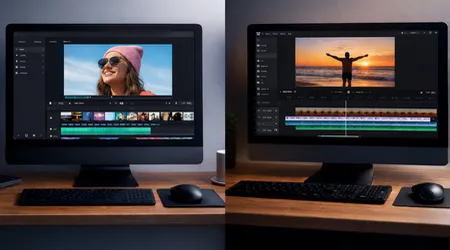
I Switched from CapCut to VN… Here’s What Happened
“I left CapCut for VN thinking it would be a clear upgrade… but after actually using it, I realized something — better doesn’t always mean easier.”
-
By: Nara Kinsley

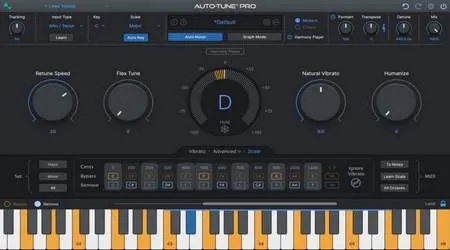
Antares Auto-Tune Pro — A Tool That Shapes Intent, Not Just Pitch
When discussing vocal production, it’s difficult to separate technique from intention. Pitch correction, in that sense, is not merely about fixing inaccuracies—it’s about defining
-
By: Adrian Vexley
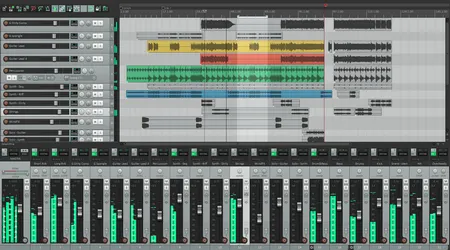
REAPER Review 2026: The Most Powerful Budget DAW for Professionals?
REAPER by Cockos Inc. has built a reputation as one of the most powerful yet affordable digital audio workstations available today. Loved by audio engineers, producers, and power
-
By: Adrian Vexley
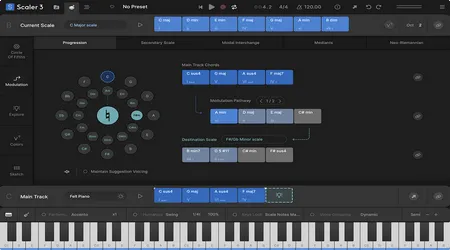
Scaler 3 Review: A Structured Approach to Harmonic Composition
Scaler 3 is designed as a structured tool for harmonic composition, intended to assist users in generating chord progressions and musical ideas within a controlled framework.
-
By: Richard Holloway