
In modern vocal production, pitch correction is no longer just a repair tool. It has become part of the creative decision-making process—shaping whether a vocal feels natural, precise, or intentionally stylized.
Between Celemony Melodyne and Antares Auto-Tune, the difference is not simply in how correction is applied, but in how each tool influences the way we approach vocals as a whole.
Celemony Melodyne
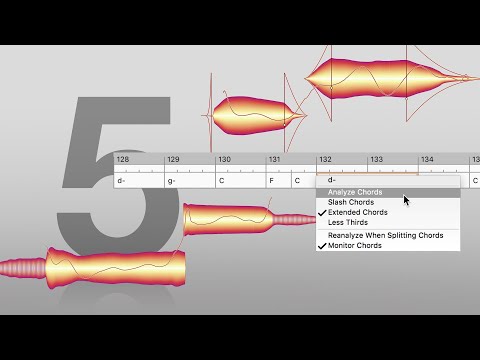
Melodyne is built around the idea that a recorded performance is not a fixed outcome, but a flexible foundation. Rather than treating audio as something to be processed globally, it approaches each note as an individual element—open to adjustment, refinement, and subtle reinterpretation.
This perspective naturally positions Melodyne within a post-performance workflow. The recording comes first, carrying its original intent and expression. From there, the tool provides a controlled environment to revisit each detail with precision—whether that means correcting pitch, reshaping timing, or preserving the nuances that define the performance.
What stands out is not just the level of control, but the pacing it encourages. Melodyne does not push for immediate results. Instead, it creates space for deliberate decisions, where each adjustment is made in context rather than in haste.
In practice, this leads to a workflow that feels less reactive and more intentional—where editing becomes an extension of the creative process, rather than a corrective afterthought.
Antares Auto-Tune
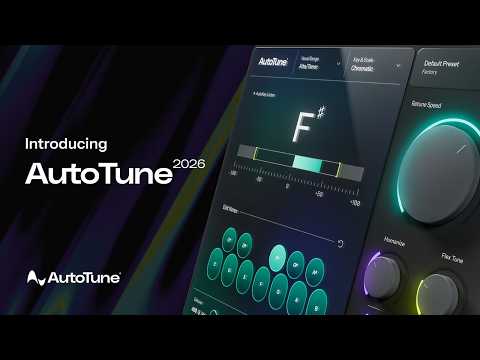
Auto-Tune is built around immediacy. Rather than positioning pitch correction as a separate stage, it integrates the process directly into the performance itself. The adjustment happens as the vocal unfolds, allowing decisions to be made in motion rather than in retrospect.
This real-time behavior subtly reshapes the role of the user. Instead of stepping in later as an editor, the user engages with pitch as part of the recording process—responding to it, and in many cases, performing into it. The result is not only a corrected vocal, but a performance that has already been guided toward its final form.
At its core, Auto-Tune does not emphasize control in the traditional, detailed sense. It prioritizes responsiveness and continuity, ensuring that the creative flow remains uninterrupted. This makes it particularly aligned with workflows where timing, momentum, and immediate feedback play a central role.
In this context, pitch correction becomes less about refinement and more about direction—quietly shaping the vocal as it happens, rather than reconstructing it afterward.
Workflow Impact
The philosophical difference becomes more apparent once the tools are placed inside a real production context—where decisions are no longer abstract, but tied to time, momentum, and creative intent.
With Celemony Melodyne:
The workflow tends to follow a clearly defined sequence: performance first, refinement second. This separation creates a distinct phase for listening, evaluating, and adjusting without the pressure of real-time execution.
Recording, in this case, is approached with a focus on capturing emotion and phrasing rather than technical perfection. The understanding is that pitch can be refined later, allowing the performer to stay within a more expressive and less constrained space.
Once inside Melodyne, the process becomes more deliberate. Notes are not simply corrected—they are interpreted. Small variations in pitch, timing, and transitions are assessed in context, and decisions are made with a clear awareness of how each adjustment affects the musicality of the phrase.
This results in a workflow that encourages:
- Slower, more intentional decision-making
- A deeper engagement with micro-details (pitch drift, note transitions, vibrato behavior)
- A consistent separation between performance energy and editorial precision
Rather than reacting in the moment, the user operates with distance and clarity. Each edit becomes a considered choice, often guided by repeated listening rather than immediate instinct.
Over time, this approach tends to produce vocals that feel cohesive and natural, not because they were untouched, but because the editing process respected the internal logic of the performance.
With Antares Auto-Tune:
The workflow shifts toward immediacy. Instead of dividing performance and correction into separate stages, both happen simultaneously—often within the same moment.
As the vocalist performs, pitch correction is already shaping the output. This creates a feedback loop where the performer hears a near-final version of their voice in real time, subtly influencing how they phrase, sustain, and transition between notes.
Because of this, decision-making becomes more instinctive:
- Settings such as retune speed and humanization are adjusted early, sometimes even before recording begins
- The focus shifts from fixing individual notes to shaping an overall vocal behavior
- Corrections are felt as part of the performance, not as a separate intervention
This integration leads to a different kind of creative flow. Instead of stepping back to analyze, the user remains inside the momentum of the session. Adjustments are made quickly, often based on feel rather than detailed inspection.
In contexts where a “tuned” vocal character is intentional, this approach becomes especially effective. The sound is not something that emerges later—it is present from the beginning, guiding both performance and production decisions.
The contrast between the two is subtle but significant.
With Celemony Melodyne, the workflow introduces distance—allowing ideas to be refined with clarity and control.
With Antares Auto-Tune, the workflow removes that distance—embedding correction directly into the act of creation.
Neither approach is inherently better. Each simply shapes a different relationship between the creator, the process, and the evolving sound.
Creative Decision Layer
Ultimately, the choice between Celemony Melodyne and Antares Auto-Tune is not defined by capability, but by the way each tool aligns with your creative rhythm and decision-making process.
Choose Celemony Melodyne if:
You are comfortable treating vocals as material that can be revisited, examined, and refined with intention.
This approach tends to suit workflows where:
- Recording is seen as a foundation, not a final statement
- Decisions are made in layers, often after stepping back and listening in context
- Subtlety matters—small pitch movements, timing adjustments, and phrasing nuances are part of the final polish
Working with Melodyne often feels closer to editing than performing. You are not reacting in real time; instead, you are shaping the result with clarity and distance. This allows for a more measured perspective, where each adjustment is guided by how the vocal sits within the arrangement, rather than how it felt in the moment.
It is particularly effective in scenarios where:
- The vocal carries emotional weight that should remain intact
- Transparency is important, and correction should not draw attention to itself
- You prefer making decisions with full context—after instrumentation, arrangement, and balance are already in place
In this sense, Melodyne supports a workflow that values control, patience, and refinement. The creative process unfolds gradually, with each pass bringing the vocal closer to its intended form.
Choose Antares Auto-Tune if:
You prefer a workflow where decisions happen in parallel with performance, not after it.
This approach is often aligned with creators who:
- Value speed and continuity in their process
- Make creative decisions instinctively, rather than analytically
- See vocal processing as part of the performance itself, not a separate stage
With Auto-Tune, pitch correction becomes part of the feedback loop during recording. The vocalist hears the processed result immediately, which can influence delivery, phrasing, and even confidence. In this way, the tool does not just correct—it participates.
This becomes especially relevant when:
- The vocal aesthetic is intentionally modern or stylized
- Consistency and tightness are needed early in the production process
- You want to maintain momentum without breaking the creative flow for detailed editing
Rather than stepping back to refine, you are shaping the outcome as it unfolds. The process feels continuous, with fewer interruptions between idea and execution.
A Matter of Creative Direction
In many cases, the decision between these two tools reflects a deeper preference in how you approach creation.
Some workflows benefit from distance—where ideas are captured first, then evaluated and refined with precision. Others rely on immediacy—where decisions are made in motion, guided by feel rather than analysis.
Neither approach is inherently better. Both lead to compelling results when used with intention.
What matters is recognizing which process allows you to stay connected to the music without friction.
Output Perspective (Extended)
Interestingly, both Celemony Melodyne and Antares Auto-Tune are fully capable of delivering technically accurate pitch correction. At a surface level, they can arrive at similarly “in-tune” results. What separates them is not accuracy, but the path taken to reach that accuracy—and how that path shapes the final perception of the vocal.
With Celemony Melodyne, the outcome tends to feel natural and unobtrusive because the process itself is inherently contextual. Each note is approached as part of a phrase rather than an isolated unit. Subtle variations in pitch drift, timing, and transitions are preserved or adjusted with intention, rather than normalized.
This means that elements such as:
- the way a note gently leans into pitch
- the slight instability at the beginning of a phrase
- or the natural decay at the end of a sustained vocal
can remain intact if they serve the expression. As a result, the listener often perceives the vocal as “untouched,” even though it has been carefully refined. The transparency is not accidental—it is a direct consequence of decisions made at a micro level, in relation to musical context.
In contrast, Antares Auto-Tune approaches the same goal from a fundamentally different angle. Because correction can occur in real time—or within a system that prioritizes speed and consistency—the output often reflects a more uniform interpretation of pitch. Notes are guided toward defined targets with a certain immediacy, which can either remain subtle or become part of the vocal’s identity.
When used transparently, this creates a polished and stable vocal that sits cleanly in a mix, with minimal fluctuation. However, when pushed further, the same mechanism produces the familiar “locked-in” effect, where transitions between notes become sharper and more intentional. In this context, pitch correction is no longer hidden—it becomes an audible characteristic.
What becomes clear at this stage is that the distinction is no longer technical, but aesthetic.
Celemony Melodyne leans toward preserving the illusion of an organic performance, where correction supports expression without redefining it.
Antares Auto-Tune, on the other hand, offers the possibility of shaping a vocal into something more controlled, and at times more stylized—where precision itself becomes part of the sound.
In practice, this means the choice between them subtly influences how a listener interprets the vocal:
whether it feels like a performance that has been carefully refined, or a sound that has been deliberately designed.
Closing Insight
Pitch correction, at its core, extends beyond the act of fixing notes. It becomes part of how a vocal performance is interpreted, refined, and ultimately presented. What may seem like a technical adjustment often carries creative weight—subtly influencing timing, phrasing, and even the emotional contour of a performance.
Choosing between Celemony Melodyne and Antares Auto-Tune is therefore less about selecting a tool, and more about defining a working perspective. It reflects whether you prefer to step back and shape a performance with deliberate precision, or remain within the flow of the performance and guide it as it evolves in real time.
With Melodyne, the process introduces a layer of distance—a space where decisions can be made with clarity and intention. This often leads to results that feel considered, where each adjustment supports the natural identity of the vocal. The performance is not replaced, but carefully reinforced.
Auto-Tune, on the other hand, operates closer to the moment itself. It allows decisions to happen alongside the performance, sometimes even influencing how that performance is delivered. In this context, pitch correction becomes part of the expression rather than a response to it.
Neither approach is inherently superior. Instead, each defines a different relationship between the creator and the material. One emphasizes reflection and control; the other prioritizes immediacy and interaction.
And it is within that relationship that the final vocal takes shape—not only in terms of pitch accuracy, but in how it feels, how it moves, and how it communicates its intent.