Ableton Live vs FL Studio (2026): Full Comparison, Pros & Cons, and Which DAW Is Better?
Stuck choosing between Ableton Live and FL Studio? You’re not alone. These two DAWs dominate modern music production—but they’re built for very different workflows. One is all about speed, live performance, and creative flow, while the other excels at beatmaking, MIDI control, and beginner-friendly design. So which one actually fits your style—and more importantly, which one will help you make better music faster?



Why Are Ableton Live and FL Studio So Popular?
Ableton Live and FL Studio have become two of the most popular digital audio workstations (DAWs) in the world because they cater to different styles of music production while remaining powerful, flexible, and accessible.
First, both DAWs offer unique workflows that stand out from competitors. Ableton Live is known for its fast, performance-oriented design, especially with its Session View, which allows producers to experiment with loops and ideas in real time. On the other hand, FL Studio is famous for its pattern-based workflow and highly intuitive interface, making it incredibly easy to start creating music quickly.
Second, they both provide strong built-in tools and plugins. FL Studio includes a wide range of instruments and effects right out of the box, making it an excellent choice for beginners and beatmakers. Ableton Live, while more minimal in quantity, focuses on high-quality, flexible tools that are ideal for sound design and professional production.
Another key factor is their appeal to different types of users. FL Studio is widely favored by hip-hop and trap producers due to its powerful piano roll and beatmaking capabilities. Meanwhile, Ableton Live is a top choice for electronic music producers, DJs, and live performers because of its seamless integration with hardware and live sets.
Finally, both DAWs have built strong global communities. Thousands of tutorials, presets, and third-party plugins are available online, making it easier for users to learn, grow, and stay inspired.
In short, Ableton Live and FL Studio are popular because they combine ease of use, powerful features, and flexibility, while also supporting different creative workflows and music genres.
Quick Verdict
Choosing between Ableton Live and FL Studio ultimately depends on your production style and priorities.
Ableton Live stands out for its streamlined, performance-oriented workflow, making it a preferred choice for electronic music producers, DJs, and professionals who value speed, flexibility, and real-time creativity.
FL Studio, on the other hand, excels in beatmaking and MIDI composition, offering an intuitive interface and one of the most advanced piano roll systems available—ideal for beginners and producers focused on hip-hop, trap, and melody-driven genres.
In essence:
- Ableton Live is best suited for workflow efficiency and live performance.
- FL Studio is the stronger option for creative beatmaking and ease of use.
What is Ableton Live?
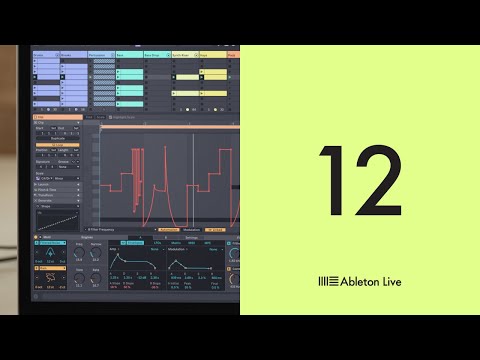
Ableton Live is a professional digital audio workstation (DAW) designed for music production, live performance, and creative sound design. It stands out for its dual-view workflow—Session View for real-time experimentation and Arrangement View for traditional timeline-based editing—allowing producers to move seamlessly between idea generation and full track production.
History & Industry Position
Released in 2001 by the German company Ableton, Ableton Live quickly gained recognition for its innovative approach to music creation. Unlike traditional DAWs at the time, it introduced a non-linear workflow that allowed musicians to trigger loops and clips in real time.
Today, Ableton Live is widely regarded as one of the industry-leading DAWs, especially in electronic music production. It is heavily used by EDM producers, DJs, and live performers, and has become a standard tool on festival stages and in modern studios worldwide.
Main Use Cases
Ableton Live is primarily used for:
- Electronic Music Production – Ideal for EDM, house, techno, and experimental genres
- Live Performance & DJ Sets – Real-time clip launching and controller integration
- Sound Design – Advanced audio manipulation, sampling, and synthesis
- Songwriting & Arrangement – Flexible workflow for building full tracks
- Remixing & Loop-Based Production – Fast idea sketching and iteration
In summary: Ableton Live is a powerful, flexible DAW built for producers who value speed, creativity, and performance-oriented workflows.
What is FL Studio?
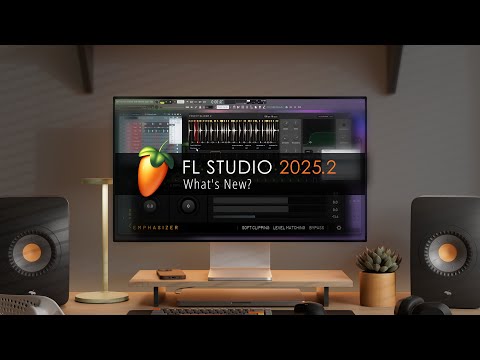
FL Studio is a powerful digital audio workstation (DAW) developed by Image-Line, designed for music production, beatmaking, and MIDI composition. It features a pattern-based workflow combined with a highly intuitive interface, allowing users to create beats, melodies, and full tracks quickly and efficiently.
Why Is It So Popular?
FL Studio has gained massive popularity due to several key advantages:
- Industry-leading Piano Roll – Widely considered one of the best for MIDI editing and melody creation
- Beginner-Friendly Interface – Easy to learn, even for first-time producers
- Lifetime Free Updates – One-time purchase with ongoing updates at no extra cost
- Extensive Built-in Plugins – Comes with a large collection of instruments, effects, and tools
- Strong Community Support – Thousands of tutorials, presets, and online resources available
These factors make FL Studio especially attractive to independent producers and content creators.
Main Use Cases
FL Studio is commonly used for:
- Beatmaking – Ideal for hip-hop, trap, drill, and lo-fi
- MIDI Composition – Creating melodies, chords, and complex patterns
- Home Studio Production – Accessible setup for beginners and intermediate users
- Loop-Based Production – Fast creation using patterns and sequences
- Electronic Music Production – Also widely used for EDM and pop
In summary: FL Studio is a versatile and accessible DAW that excels in creative beatmaking, MIDI workflow, and ease of use, making it a top choice for both beginners and experienced producers.
Key Feature Comparison
Workflow & User Interface
When comparing Ableton Live and FL Studio, workflow and user interface are among the most important differences—and often the deciding factor for most producers.
Ableton Live: Fast & Performance-Oriented
Ableton Live is built around a dual-view system:
- Session View → non-linear, loop-based workflow for experimentation and live performance
- Arrangement View → traditional timeline for structuring full tracks
This design allows producers to sketch ideas quickly and then transition seamlessly into a full arrangement. The interface is clean, minimal, and optimized for speed, reducing distractions and keeping the focus on creativity.
Best for:
- Producers who value speed and efficiency
- Live performers and DJs
- Workflow-driven production styles
FL Studio: Flexible & Pattern-Based
FL Studio uses a pattern-based workflow centered around:
- Channel Rack → where sounds and patterns are created
- Playlist → where patterns are arranged into a full track
- Piano Roll → advanced MIDI editing
Unlike Ableton, FL Studio allows multiple workflows simultaneously, giving users more flexibility—but sometimes at the cost of structure. The interface is more colorful and modular, which many beginners find more approachable.
Best for:
- Beatmakers who prefer step-by-step creation
- Producers who like visual control
- Users who want flexibility over strict structure
Key Differences at a Glance
- Speed: Ableton Live is faster for idea generation
- Flexibility: FL Studio offers more customizable workflows
- Structure: Ableton is cleaner; FL can feel more complex
- Learning Curve: FL Studio is easier for beginners
Verdict
If you prioritize a streamlined, professional workflow, Ableton Live is the stronger choice.
If you prefer a flexible, visually guided workflow, FL Studio may feel more intuitive and creative.
Piano Roll & MIDI
When it comes to MIDI composition and piano roll functionality, the difference between FL Studio and Ableton Live is significant—and often a deciding factor for many producers.
FL Studio: Industry-Leading Piano Roll
FL Studio is widely regarded as having one of the best piano rolls in the industry.
Key strengths:
- Advanced MIDI editing tools (slide notes, ghost notes, scale highlighting)
- Easy chord building and melody creation
- Precise control over velocity, timing, and articulation
- Built-in helpers for composing in key
This makes FL Studio extremely efficient for creating melodies, chords, and complex patterns, especially in genres like hip-hop, trap, and pop.
Best for:
- Beatmakers and melody-focused producers
- Fast MIDI composition
- Users who rely heavily on piano roll workflows
Ableton Live: Clean & Functional MIDI Workflow
Ableton Live offers a more streamlined and minimalist approach to MIDI editing.
Key strengths:
- Clean and distraction-free interface
- Powerful MIDI effects (Arpeggiator, Scale, Chord tools)
- Seamless integration with instruments and automation
- Strong workflow for combining MIDI with audio
While it may not be as feature-rich visually as FL Studio, Ableton’s MIDI system is efficient and deeply integrated into its overall workflow.
Best for:
- Producers who prefer simplicity and speed
- Sound designers using MIDI + effects chains
- Electronic music workflows
Key Differences at a Glance
- Depth: FL Studio offers more advanced piano roll features
- Simplicity: Ableton Live provides a cleaner interface
- Creative Tools: Ableton excels with MIDI effects
- Precision Editing: FL Studio has the advantage
Verdict
If your workflow revolves around detailed MIDI editing and melody creation, FL Studio is the clear winner.
If you prefer a clean, efficient MIDI workflow integrated with sound design tools, Ableton Live remains a strong and capable choice.
Audio Recording & Editing
When it comes to recording and editing audio, Ableton Live and FL Studio take different approaches—one focused on precision and flexibility, the other on simplicity and integration.
Ableton Live: Advanced & Professional Workflow
Ableton Live is widely considered more advanced and efficient for audio recording and editing.
Key strengths:
- Multitrack recording with smooth workflow
- Comping (take lanes) for selecting the best vocal or instrument takes
- Powerful Warping for time-stretching and tempo syncing
- Real-time audio manipulation and automation
- Clean integration between audio and MIDI
This makes Ableton Live highly suitable for recording vocals, instruments, and full sessions, especially in professional or semi-professional environments.
Best for:
- Vocal recording & editing
- Live instruments (guitar, piano, etc.)
- Producers working with both audio and MIDI
FL Studio: Capable but Less Streamlined
FL Studio has improved significantly in audio recording, but it still feels less streamlined compared to Ableton.
Key strengths:
- Edison for detailed waveform editing
- Playlist-based audio arrangement
- Flexible routing in the mixer
- Suitable for basic recording needs
However, some workflows (like comping or advanced editing) may require extra steps or plugins, making it slightly less efficient for heavy recording tasks.
Best for:
- Basic vocal recording
- Sample-based production
- Beatmakers who occasionally record audio
Key Differences at a Glance
- Recording Workflow: Ableton Live is smoother and more professional
- Editing Power: Ableton offers more advanced tools
- Ease of Use: FL Studio is simpler but less structured
- Audio + MIDI Integration: Stronger in Ableton
Verdict
If your work involves serious audio recording, vocal production, or live instruments, Ableton Live is the better choice.
If you mainly focus on beatmaking with occasional audio recording, FL Studio remains more than sufficient.
Plugins & Instruments
When comparing built-in plugins and instruments, FL Studio and Ableton Live take very different approaches: quantity vs quality and flexibility.
FL Studio: Large Collection & Ready to Use
FL Studio is known for offering a wide range of built-in plugins right out of the box, making it especially attractive for beginners and producers who want everything included.
Key strengths:
- Large selection of instruments (e.g., Sytrus, Harmor, FLEX)
- Many built-in effects (EQ, reverb, delay, distortion, etc.)
- “Ready-to-use” sounds and presets
- Great for producing without third-party plugins
Best for:
- Beginners who want an all-in-one package
- Beatmakers and fast production workflows
- Producers who rely on presets and stock sounds
Ableton Live: High-Quality & Modular Design
Ableton Live focuses on fewer but highly flexible and professional-grade tools.
Key strengths:
- Powerful instruments (Wavetable, Operator, Sampler)
- Audio Effect Racks for custom chains
- Deep modulation and macro control
- Designed for sound design and experimentation
Instead of offering a large number of plugins, Ableton emphasizes modularity, allowing users to build complex effect chains and unique sounds.
Best for:
- Sound designers and advanced producers
- Electronic music production
- Users who prefer customization over presets
Key Differences at a Glance
- Quantity: FL Studio offers more plugins
- Flexibility: Ableton Live provides deeper control
- Ease of Use: FL Studio is more beginner-friendly
- Sound Design: Ableton Live is more powerful
Verdict
If you want a DAW with a large collection of ready-to-use plugins and instruments, FL Studio is the better choice.
If you prioritize sound design, flexibility, and professional-grade tools, Ableton Live stands out as the stronger option.
Performance & Stability
Performance and stability are critical when working on complex projects. Both Ableton Live and FL Studio are highly optimized, but they differ in how they handle system resources and large sessions.
Ableton Live: Optimized for Real-Time Performance
Ableton Live is built with real-time performance in mind, making it highly reliable during live sets and demanding sessions.
Key strengths:
- Stable performance during live playback and triggering
- Efficient handling of audio warping and real-time effects
- Smooth operation with external hardware (controllers, MIDI devices)
- Consistent behavior in both small and large projects
However, heavy use of plugins and effects can still increase CPU load, especially in complex arrangements.
Best for:
- Live performance and DJ sets
- Real-time audio processing
- Stable playback in dynamic environments
FL Studio: Efficient but Project-Dependent
FL Studio is also very capable, but performance can vary depending on project structure and plugin usage.
Key strengths:
- Good CPU management for pattern-based projects
- Flexible routing allows efficient resource use
- Stable for most beatmaking and mid-sized projects
In very large or unoptimized projects, performance may become less consistent compared to Ableton Live.
Best for:
- Beatmaking and loop-based production
- Medium-sized projects
- Users who optimize their workflow
Key Differences at a Glance
- Real-Time Stability: Ableton Live has the advantage
- CPU Efficiency: Both are strong, depends on usage
- Large Projects: Ableton tends to be more consistent
- Optimization Needs: FL Studio may require better project management
Verdict
If you need maximum stability for live performance and large, complex sessions, Ableton Live is the more reliable choice.
If you focus on beatmaking and structured projects, FL Studio delivers solid performance with proper optimization.
Pros & Cons
A deeper look at the strengths and weaknesses of Ableton Live and FL Studio reveals how each DAW serves different types of producers.
Ableton Live
✅ Pros
1. Fast & Efficient Workflow
Ableton Live is designed for speed and minimal friction. Its dual-view system (Session + Arrangement) allows producers to quickly sketch ideas and develop full tracks without breaking creative flow.
2. Industry-Leading Live Performance
One of Ableton’s biggest advantages is its real-time performance capability. Clip launching, MIDI mapping, and controller integration make it the top choice for DJs and live performers.
3. Powerful Audio Warping
Ableton’s Warping engine is among the best available, allowing precise time-stretching and tempo syncing without significant loss in quality.
4. Clean & Professional Interface
The UI is minimal, distraction-free, and consistent, making it easier to focus on production rather than navigation.
5. Strong Audio + MIDI Integration
Ableton seamlessly combines audio and MIDI workflows, which is ideal for hybrid production styles.
6. Advanced Sound Design Tools
Devices like Wavetable, Operator, and Audio Effect Racks provide deep control for creating unique sounds.
❌ Cons
1. Higher Price Point
Ableton Live (especially Suite) is relatively expensive compared to many competitors.
2. Limited Built-in Plugin Variety
While high-quality, the number of included instruments and effects is less extensive than FL Studio.
3. Piano Roll Is Not the Best
MIDI editing is solid but lacks some of the advanced features found in FL Studio.
4. Learning Curve for Beginners
The workflow can feel unfamiliar at first, especially for users coming from traditional DAWs.
FL Studio
✅ Pros
1. Best-in-Class Piano Roll
FL Studio offers one of the most advanced and intuitive piano roll systems, making melody and chord creation extremely efficient.
2. Beginner-Friendly Workflow
The interface is visual, flexible, and easy to understand, making it ideal for newcomers.
3. Large Collection of Plugins
FL Studio includes a wide range of instruments and effects, reducing the need for third-party plugins.
4. Lifetime Free Updates
A major advantage—users receive free updates for life, making it highly cost-effective long-term.
5. Flexible & Customizable Workflow
Users can approach production in multiple ways, allowing for a more personalized experience.
6. Strong Beatmaking Capabilities
FL Studio is widely considered the go-to DAW for beatmakers, especially in hip-hop and trap.
❌ Cons
1. Less Structured Workflow
The flexibility can sometimes lead to a messy or unorganized project structure, especially for beginners.
2. Audio Recording Limitations
While improved, recording and advanced editing are still less streamlined than in Ableton Live.
3. Not Ideal for Live Performance
FL Studio lacks the same level of real-time performance tools as Ableton.
4. Mixing Workflow Can Feel Indirect
Routing and mixing can require more steps compared to more traditional DAWs.
Final Perspective
- Ableton Live excels in professional workflow, live performance, and sound design
- FL Studio dominates in beatmaking, MIDI composition, and accessibility
Choosing between them ultimately depends on whether you prioritize performance and structure or creativity and ease of use.
Pricing Comparison
Understanding the pricing structure of Ableton Live and FL Studio is crucial, as both DAWs follow a one-time purchase model, but differ significantly in long-term value.
Ableton Live Pricing (2026)
Ableton Live is available in three main editions:
- Intro: ~$99
- Standard: ~$349
- Suite: ~$749
One-time purchase
Paid major upgrades (future versions cost extra)
Key insight:
While the entry price is affordable, the full experience (Suite) is relatively expensive, and long-term costs can increase due to paid upgrades.
FL Studio Pricing (2026)
FL Studio offers four editions:
- Fruity Edition: ~$99
- Producer Edition: ~$199
- Signature Bundle: ~$299
- All Plugins Edition: ~$499
One-time purchase
Lifetime free updates included (major advantage)
Key insight:
You pay once and receive all future updates for free, making it one of the best long-term value DAWs.
| Pricing Tier | Ableton Live | FL Studio | Best Value |
|---|---|---|---|
| Entry Version | Intro (~$99) | Fruity Edition (~$99) | Tie |
| Mid Tier | Standard (~$349) | Producer Edition (~$199) | FL Studio |
| Full Version | Suite (~$749) | All Plugins (~$499) | FL Studio |
| Free Trial | Yes (Full Trial) | Yes (Limited Export) | Ableton Live |
| Updates | Paid Major Upgrades | Lifetime Free Updates | FL Studio |
| Long-Term Cost | Higher Over Time | Lower (One-Time Purchase) | FL Studio |
Value Analysis
- Short-term:
Both DAWs are similar at entry level (~$99) - Mid-range users:
FL Studio is significantly cheaper for comparable features - Long-term investment:
FL Studio wins due to lifetime free updates, while Ableton users may spend more over time
Verdict
- Best value for money → FL Studio
- Best for professional ecosystem (but pricier) → Ableton Live
If budget matters, FL Studio is the clear winner.
If you prioritize workflow and industry usage, Ableton Live may justify the higher cost.
Use Case: Which One Is Better For…?
Choosing between Ableton Live and FL Studio ultimately depends on your production goals, genre, and workflow preferences. Below is a clear breakdown based on real-world use cases.
EDM, Techno, House & DJ Performance
Best Choice: Ableton Live
Ableton Live is specifically designed for electronic music production and live performance. Its Session View allows real-time triggering of clips, making it ideal for DJs and performers.
Perfect for:
- EDM producers
- Live sets & remixing
- Loop-based experimentation
Beatmaking (Hip-Hop, Trap, Drill)
Best Choice: FL Studio
FL Studio dominates beatmaking thanks to its advanced piano roll and pattern workflow, allowing fast creation of drums, melodies, and chord progressions.
Perfect for:
- Hip-hop & trap producers
- Loop-based beat creation
- Melody-focused production
Beginners & New Producers
Best Choice: FL Studio
FL Studio is more beginner-friendly, with a visual interface and easier learning curve. New users can start making music quickly without deep technical knowledge.
Perfect for:
- First-time producers
- Hobbyists
- Content creators
Vocal Recording & Live Instruments
Best Choice: Ableton Live
Ableton offers a more professional recording and editing workflow, making it better suited for vocals, guitars, and full recording sessions.
Perfect for:
- Singers & vocal producers
- Recording instruments
- Hybrid audio + MIDI production
Sound Design & Experimental Music
Best Choice: Ableton Live
With its modular devices and effect racks, Ableton is ideal for deep sound design and creative experimentation.
Perfect for:
- Sound designers
- Ambient / experimental producers
- Advanced users
Film Scoring & Composition
Better Alternative: Cubase
While both DAWs can handle composition, dedicated scoring tools are stronger in Cubase.
Final Recommendation
- Choose Ableton Live if you prioritize performance, audio workflow, and sound design
- Choose FL Studio if you focus on beatmaking, MIDI, and ease of use
There is no absolute “best” DAW—only the one that fits your creative workflow and goals.
Ableton Live vs FL Studio: Full Feature Comparison Table
| Feature | Ableton Live | FL Studio | Best Choice |
|---|---|---|---|
| Best For | EDM, Live Performance, Sound Design | Beatmaking, Hip-Hop, Trap | Depends on Genre |
| Workflow | Fast, Linear + Session View | Pattern-Based, Flexible | Ableton Live |
| User Interface | Minimal, Clean, Professional | Colorful, Modular, Visual | Depends on Preference |
| Ease of Use | Moderate Learning Curve | Beginner-Friendly | FL Studio |
| Piano Roll & MIDI | Good + MIDI Effects | Industry-Leading | FL Studio |
| Audio Recording | Advanced + Comping | Basic to Intermediate | Ableton Live |
| Audio Editing | Warping, Real-Time Editing | Edison + Playlist Editing | Ableton Live |
| Plugins & Instruments | High Quality, Modular | Large Collection | FL Studio |
| Sound Design | Advanced & Flexible | Good | Ableton Live |
| Live Performance | Industry-Leading | Limited | Ableton Live |
| Performance & Stability | Very Stable (Real-Time) | Good (Project-Dependent) | Ableton Live |
| CPU Efficiency | Optimized for Live Use | Efficient for Patterns | Tie |
| Built-in Sounds | Professional Quality | More Variety | FL Studio |
| Pricing (Full Version) | ~$749 (Suite) | ~$499 (All Plugins) | FL Studio |
| Updates | Paid Upgrades | Lifetime Free | FL Studio |
| Platform | Windows & macOS | Windows & macOS | Tie |
Before making your final decision, here are some of the most common questions producers ask when choosing between Ableton Live and FL Studio.
Frequently Asked Questions (FAQ)
Is Ableton Live better than FL Studio?
Ableton Live is generally better for workflow efficiency, audio recording, and live performance, while FL Studio is better for MIDI composition, beatmaking, and ease of use. The best choice depends on your production style.
Is FL Studio good for beginners?
Yes, FL Studio is widely considered one of the most beginner-friendly DAWs thanks to its intuitive interface, visual workflow, and powerful piano roll.
Which DAW is better for beatmaking?
FL Studio is the better choice for beatmaking due to its advanced piano roll, pattern-based workflow, and fast drum programming capabilities.
Which DAW is better for live performance?
Ableton Live is the industry standard for live performance, offering real-time clip launching, MIDI mapping, and seamless integration with hardware controllers.
Is Ableton Live worth the price?
Ableton Live is worth the price for producers who need professional workflow, advanced audio tools, and live performance features, although it is more expensive than FL Studio.
Does FL Studio have free updates?
Yes, FL Studio offers lifetime free updates, meaning you only pay once and receive all future versions at no additional cost.
After evaluating all key aspects including workflow, performance, pricing, and real-world use cases, we can now clearly determine which DAW stands out overall.
Final Verdict: Which DAW Wins?
After comparing all major aspects, there is no absolute winner—but if we must choose one overall, Ableton Live takes the lead.
Winner
Ableton Live
Why?
- More consistent and professional workflow
- Superior audio recording, editing, and live performance tools
- Better suited for advanced production and long-term scalability
In short, Ableton Live offers a more complete and future-proof production environment.
Strong Runner-Up: FL Studio
FL Studio remains an excellent choice, especially for:
- Beatmaking and MIDI composition
- Beginners and fast workflow users
- Producers looking for better value (lifetime free updates)
Final Take
- Choose Ableton Live if you want a professional, scalable, all-around DAW
- Choose FL Studio if you prioritize creativity, ease of use, and beatmaking efficiency
Bottom line:
- Ableton Live = Best overall power & workflow
- FL Studio = Best value & MIDI creativity
FL Studio 2026 Review – The Most Flexible DAW Just Got Smarter
FL Studio 2026 by Image-Line continues to evolve as one of the most recognizable and versatile digital audio workstations on the market. Known for its pattern-based workflow and
-
By: Adrian Vexley
CapCut Free vs Pro — Do You Actually Need to Upgrade?
CapCut is free… until you actually try to make something good — then it quietly reminds you what ‘free’ really means.
-
By: Nara Kinsley


TikTok Music Trends 2026: Viral Songs, AI Remixes & What’s Dominating Right Now
The top TikTok music trends in 2026 are driven by short-form storytelling, AI-assisted remixes, nostalgic throwbacks, and hyper-niche micro-genres. Viral success now depends less
-
By: Nara Kinsley
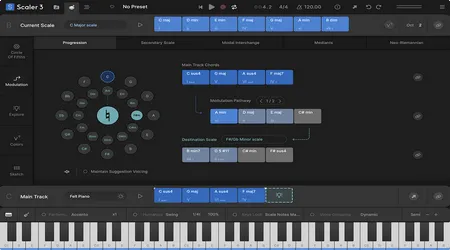
Scaler 3 Review: A Structured Approach to Harmonic Composition
Scaler 3 is designed as a structured tool for harmonic composition, intended to assist users in generating chord progressions and musical ideas within a controlled framework.
-
By: Richard Holloway

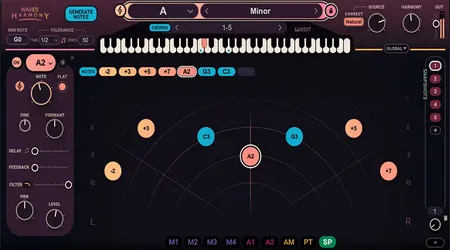
Waves Harmony Review – Surprisingly Powerful, Slightly Confusing (at First)
Let me be honest — the first time I opened Waves Harmony, I just stared at it for a few seconds. Not because it looked bad. But because I wasn’t immediately sure where to start.
-
By: Ardi Pratama

Best DAW Software 2026: Top 7 Picks for Beginners & Music Producers
Choosing the right DAW in 2026 can completely change how you make music. The wrong software slows you down—while the right one can turn ideas into finished tracks in minutes. In
-
By: Ardi Pratama