L4 Ultramaximizer Review — Still Relevant or Just Old News?

Alright, let’s talk about the Waves Audio L4 Ultramaximizer.

This plugin has been around for quite a while. Not exactly “vintage,” but in plugin years… yeah, it’s getting there. The question is: does it still hold up today, or is it just something people keep using out of habit?

I spent some time revisiting it properly (not just slapping it on the master and calling it a day), and here’s the honest take.

OUR EXPERT
Ardi Pratama
Senior Tech Writer, Digital Audio Specialist
Ardi Pratama is a tech reviewer with 15+ years of experience in software and digital audio. He shares practical insights in a simple, no-nonsense way.
Waves L4 Ultramaximizer Review Summary
Overall Rating
4.1
Performance Breakdown
Ease of Use
4.5
Customer Support
4.2
Value for Money
4.4
Functionality
4.1

Strengths

  • Super simple workflow — no overthinking, just set threshold and go.
  • Clean and transparent limiting at moderate levels (doesn’t wreck your mix).
  • Very stable and lightweight — runs smoothly even on older setups.
  • Built-in IDR dithering is actually useful for final exports.

Limitations

  • Feels a bit outdated compared to modern limiters with smarter processing.
  • Can sound flat or lifeless when pushed hard (this is where it struggles).
  • No tonal shaping, saturation, or “character” options.
  • Lacks advanced loudness tools for competitive mastering.

First Impression — Simple, Almost Suspiciously Simple

When you open L4, the first thing you notice:

It’s clean. Very clean.

No overwhelming knobs. No “AI mastering” buttons trying to impress you.

Just:

  • Threshold
  • Output Ceiling
  • Release
  • IDR (dither)

That’s it.

At first, I actually thought:

“Wait… is that all?”

And yeah, that is all.

But that’s kind of the point.
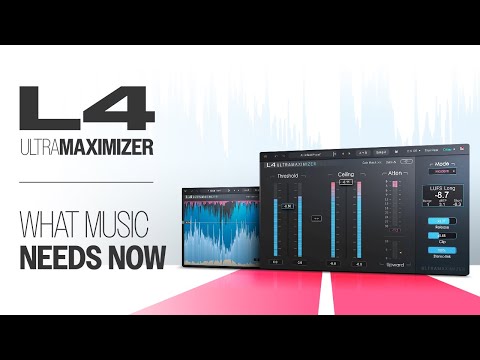
Introducing L4 Ultramaximizer: A New Era of Loud.

What It Actually Does

L4 is a look-ahead brickwall limiter. Its job is simple:

👉 Make your track louder
👉 Prevent clipping
👉 Keep things under control

No fancy saturation. No color shaping. No secret sauce.

This is not one of those plugins that tries to “enhance your vibe.”

It just… limits. And it does it properly.


Sound Quality — Clean, But Not Always Exciting

Here’s where things get interesting.

The Good:

  • Very transparent at moderate levels
  • Doesn’t destroy your mix if you’re not pushing it too hard
  • Reliable for keeping peaks in check

The Not-So-Good:

  • Can feel a bit flat if you push it aggressively
  • Doesn’t add character or punch
  • Compared to newer limiters, it’s a bit… polite

At some point I pushed it harder just to see what happens.

Result:

“Okay… it’s loud, but something feels missing.”

That “missing” thing is usually depth or excitement.

Modern limiters tend to add a bit of vibe. L4 doesn’t care about vibe.


The Workflow — Fast, No Drama

This is honestly where L4 still shines.

You don’t need to:

  • Learn anything complicated
  • Read a manual
  • Watch a 20-minute tutorial

You just:

  1. Pull down threshold
  2. Set ceiling
  3. Adjust release if needed
  4. Done

I like plugins that don’t waste my time, and L4 is definitely in that category.


IDR Dithering — Quietly Useful

One thing people overlook: the built-in IDR dithering.

If you’re exporting to lower bit depth (like 16-bit), this is actually handy.

No need for extra plugin at the end of the chain.

Not flashy, but useful.


Where L4 Still Makes Sense

I wouldn’t use L4 for everything, but it still fits in certain situations:

  • Quick mastering drafts
  • Simple projects
  • Podcasts / spoken content
  • When you just need clean limiting without thinking too much

Basically:

“I just need this to not clip, and I don’t want to overcomplicate things.”

Perfect.


Where It Falls Behind

Let’s be real for a second.

Compared to modern limiters:

  • It lacks smart processing
  • No adaptive features
  • No tonal shaping
  • No loudness optimization tools

And if you’re chasing that “commercial loud and punchy” sound…

You’ll probably feel limited by L4 before you reach your goal.


My Honest Take

L4 Ultramaximizer is like that old reliable tool in your drawer.

Not exciting. Not trendy. But it works.

Would I use it as my main mastering limiter today?

👉 Probably not.

Would I still keep it around?

👉 Yeah… actually, yes.

Because sometimes you don’t need “the best.”
You just need something that works without getting in your way.

Final Verdict
4.1 / 5
Waves L4 Ultramaximizer is not trying to be the smartest or most modern limiter — and honestly, that’s kind of its identity.

It’s built for simplicity. You drop it on your master, pull down the threshold, set your ceiling, and you’re done. No complicated settings, no second-guessing every parameter.

In real use, it works best when you don’t push it too hard. At moderate levels, it’s clean, predictable, and gets the job done without messing up your mix. But once you start chasing loudness aggressively, you’ll notice it losing a bit of depth and energy.

This is not the plugin you reach for when you want modern, punchy, “commercial loud” mastering. It simply doesn’t have that kind of character or advanced processing.

But if you need a fast, reliable limiter that just works without slowing you down, L4 still earns its place.

It’s one of those tools you don’t think about much — until you need something simple that won’t get in your way.
TikTok Music Trends 2026: Viral Songs, AI Remixes & What’s Dominating Right Now
News & Trends
TikTok Music Trends 2026: Viral Songs, AI Remixes & What’s Dominating Right Now

The top TikTok music trends in 2026 are driven by short-form storytelling, AI-assisted remixes, nostalgic throwbacks, and hyper-niche micro-genres. Viral success now depends less

Best DAW Software 2026: Top 7 Picks for Beginners & Music Producers
Guides & Tutorials / Best Software
Best DAW Software 2026: Top 7 Picks for Beginners & Music Producers

Choosing the right DAW in 2026 can completely change how you make music. The wrong software slows you down—while the right one can turn ideas into finished tracks in minutes. In

KORG Gadget 3 Review (2026): Fastest Way to Make Music or Just a Sketch Tool?
Reviews
KORG Gadget 3 Review (2026): Fastest Way to Make Music or Just a Sketch Tool?

There’s a quiet difference between software that offers possibilities… and software that actually moves you forward. KORG Gadget 3 sits firmly in the latter. Not because it does

CapCut Free vs Pro — Do You Actually Need to Upgrade?
Guides & Tutorials
CapCut Free vs Pro — Do You Actually Need to Upgrade?

CapCut is free… until you actually try to make something good — then it quietly reminds you what ‘free’ really means.

L4 Ultramaximizer Review — Still Relevant or Just Old News?
Reviews
L4 Ultramaximizer Review — Still Relevant or Just Old News?

Alright, let’s talk about the Waves Audio L4 Ultramaximizer. This plugin has been around for quite a while. Not exactly “vintage,” but in plugin years… yeah, it’s getting there.

Ableton Live vs FL Studio (2026): Full Comparison, Pros & Cons, and Which DAW Is Better?
Comparisons
Ableton Live vs FL Studio (2026): Full Comparison, Pros & Cons, and Which DAW Is Better?

Stuck choosing between Ableton Live and FL Studio? You’re not alone. These two DAWs dominate modern music production—but they’re built for very different workflows. One is all

8

🚫 AdBlock Detected

To continue download, please disable your AdBlock:

9

🚫 AdBlock Detected

To continue download, please disable your AdBlock: