Let’s be real for a second.
Most DAWs don’t actually kill your creativity because they lack features — they kill it because they slow you down.
You open them… tweak something… scroll presets… and suddenly 15 minutes gone, zero music made.
KORG Gadget 3 takes a completely different approach.
It’s not trying to give you everything. It’s trying to get you moving — fast.
What KORG Gadget 3 Actually Is
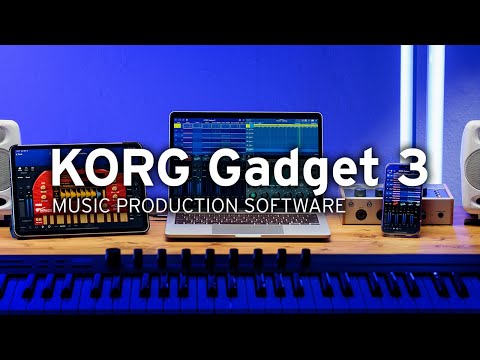
At its core, KORG Gadget 3 is an all-in-one music production environment built around small, focused instruments called gadgets.
You’re not dealing with one giant complex system. Instead, you’re stacking multiple simple tools — synths, drum machines, samplers — each designed for a specific role.
And weirdly… that limitation is what makes it powerful.
Because instead of thinking too much, you just build.
Core Features & System
You get more than 40 gadgets right out of the box.
Each one has its own sound character, its own purpose, and just enough control to shape it without overwhelming you.
And here’s the key difference:
Everything feels consistent.
No plugin chaos. No UI mismatch. No “why does this work differently?” moments.
It’s a closed ecosystem — and that’s exactly why it flows so well.
The newer additions like Santa Ana (guitar-based sounds) and Sydney (sampling-focused) expand the creative range without breaking that consistency.
On top of that, updated insert effects — including EQ and dynamics — give you more control than before, even if it’s still not a full mixing environment.
Workflow: Where It Really Wins
This is the part that makes or breaks Gadget 3.
And honestly? This is where it shines.
The workflow is built for speed.
You can go from blank project → actual idea in minutes.
No setup. No routing headaches. No decision paralysis.
The Genre Select system helps you start fast, while scale tools make sure what you play actually sounds musical — even if theory isn’t your thing.
It’s almost unfair how quickly you can build something usable.
But…
That speed comes with a ceiling.
Once your project gets complex — more layers, more effects — you’ll start to feel the limits.
This isn’t designed for huge, detailed productions.
This is designed for momentum.
Usability & Learning Curve
At first glance, the interface looks clean and structured.
And it is.
But once you start digging into multiple gadgets, patterns, and layers, there’s still a learning curve — especially if you’re coming from a traditional linear DAW.
If you’ve used grooveboxes or pattern-based systems before, you’ll adapt quickly.
If not, expect a short adjustment period.
The good news? Once it clicks, it really clicks.
Performance
For most standard projects, performance is solid.
The gadgets are relatively lightweight, which makes this especially efficient on mobile devices and mid-range systems.
It’s perfect for sketching, arranging, and building ideas on the go.
However, push it too far — especially with layered projects and heavy effects — and you may start to notice limitations depending on your setup.
Not bad. Just… not built for extremes.
Sound Design & Library
The sound library is one of Gadget’s strongest points.
It’s wide, polished, and ready to use.
Each gadget gives you enough control to tweak sounds — but stops short of deep, complex synthesis.
And that’s intentional.
This isn’t about spending hours designing one sound.
This is about building a track.
Fast.
If you love deep sound design, you might feel limited.
If you just want good sounds instantly — this delivers.
Compatibility & Integration
This is where Gadget 3 becomes more flexible than before.
With VST3 and AUv3 support, you can now use its instruments inside other DAWs instead of being locked into its standalone environment.
That means you can sketch ideas in Gadget… then finish them somewhere else.
And honestly, that’s probably the best way to use it.
Strengths
- Extremely fast workflow for idea creation
- Consistent, clean ecosystem with no plugin friction
- Large, high-quality sound library
- Great for beginners and intermediate users
- Cross-platform support (mobile + desktop)
Limitations
- Not ideal for advanced mixing and routing
- Limited flexibility compared to full DAWs
- Performance may drop in complex projects
- Sound design depth is somewhat restricted
Final Thoughts
KORG Gadget 3 knows exactly what it is — and more importantly, what it isn’t.
It’s not trying to replace your main DAW.
It’s trying to make sure you actually create something.
And in that role?
It’s one of the most effective tools out there.