Scaler 3 Review: A Structured Approach to Harmonic Composition

Scaler 3 is designed as a structured tool for harmonic composition, intended to assist users in generating chord progressions and musical ideas within a controlled framework.

OUR EXPERT
Richard Holloway
Senior Technology Analyst
Richard Holloway is a senior technology analyst with over 40 years of experience in computing and software systems. He provides structured, in-depth analysis with a focus on clarity, reliability, and long-term usability.
Scaler 3 Review Summary
Overall Rating
4.5
Performance Breakdown
Ease of Use
4.6
Customer Support
4.2
Value for Money
4.7
Functionality
4.5

Strengths

  • Structured composition workflow that simplifies chord progression development.
  • Extensive library of scales, chord sets, and harmonic variations.
  • Reliable integration with most DAWs and MIDI environments.
  • Efficient for rapid idea generation, particularly in early production stages.

Limitations

  • Feature density introduces a learning curve for new users.
  • Over-reliance on generated progressions may limit creative variation.
  • Plugin hosting is functional, though not as stable as dedicated DAWs.
  • Workflow separation from the main DAW can reduce efficiency in complex projects.

Scaler 3 is a music theory plugin developed by Scaler Music. It is positioned not merely as a chord generator, but as a structured composition environment.

The software is widely used among producers who require assistance in harmonic development, particularly in workflows where speed and consistency are prioritised.


Functional Overview

From a technical standpoint, Scaler 3 operates as a hybrid between a MIDI tool and a compositional assistant.

It allows users to:

  • Detect key and scale from MIDI or audio input
  • Generate chord progressions based on selected scales
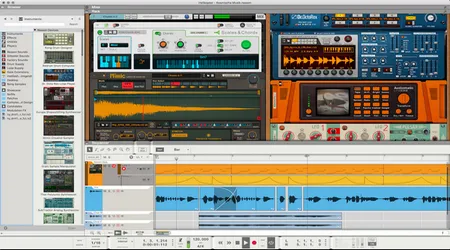
  • Arrange full musical structures using a timeline-based system
  • Host third-party plugins within its environment

The introduction of a multi-lane arrangement view—covering chords, melody, and bass—extends its functionality beyond traditional plugin behaviour.

In practice, this shifts Scaler from a supporting tool into a semi-independent composition platform.


Evaluation

Usability

The interface is organised into three primary sections: Browse, Create, and Arrange.
This structure is logical and improves navigation compared to earlier versions.

However, it is worth noting that the breadth of features introduces a degree of complexity.
New users may require time to understand the relationship between chord sets, motions, and arrangement layers.


Stability

Scaler 3 is available as VST, AU, and AAX, with an additional standalone mode.

In standard DAW environments, stability is generally consistent.
However, projects involving plugin hosting within Scaler itself may introduce additional points of failure, particularly in complex sessions.


Performance

Performance is largely dependent on usage context.

  • Basic chord generation and MIDI functions are lightweight
  • Multi-lane arrangements and plugin hosting increase CPU demand

AI-assisted features and real-time MIDI processing can also introduce minor latency under heavier workloads.


Practical Limitations

  • Over-reliance on generated progressions may reduce originality
  • Workflow can become fragmented when switching between DAW and Scaler environment
  • Plugin hosting, while useful, is not as robust as a full DAW

In practice, Scaler is most effective when used as a compositional aid rather than a complete production system.


Strengths & Limitations

Strengths

  • Structured approach to music theory application
  • Extensive library of chord sets and scales categorised by genre and mood
  • Integrated arrangement tools with timeline workflow
  • MIDI and audio detection improves workflow efficiency
  • Standalone capability adds flexibility

Limitations

  • Learning curve due to feature density
  • Limited depth in sound design compared to full DAWs
  • Dependency on presets and suggestions may affect creative independence
  • Plugin hosting introduces additional system complexity

Conclusion

Scaler 3 is a structured and capable tool for harmonic composition. It extends beyond traditional chord generators by offering a controlled environment for building musical ideas.

However, its effectiveness depends on how it is integrated into the workflow.
It performs reliably as a supporting tool, though it is less suitable as a primary production platform.

Overall, the software is functional and consistent. Its suitability will depend largely on whether the user values guided composition over manual construction.

Final Verdict
4.5 / 5
Scaler 3 is not designed to replace a full digital audio workstation, nor does it attempt to provide comprehensive production control.

From a technical standpoint, it functions as a structured tool for harmonic development, offering a controlled environment for generating chord progressions and musical ideas.

In practice, it reduces the effort required to establish a compositional foundation. However, its guided approach may introduce a degree of dependence on predefined patterns if not applied critically.

It is worth noting that its effectiveness is most apparent in early-stage workflows, where speed and structure are prioritised over detailed manual control.

Overall, Scaler 3 is a reliable and practical addition to a production setup, provided it is used as a supporting tool rather than a central environment.
Fender Studio Pro Review (2026): A Surprising All-In-One DAW with Studio-Grade Power
Reviews
Fender Studio Pro Review (2026): A Surprising All-In-One DAW with Studio-Grade Power

Fender Studio Pro, developed by PreSonus Audio Electronics, Inc., enters the competitive DAW market with a bold promise: combine studio-grade production tools with musician-first

FL Studio 2026 Review – The Most Flexible DAW Just Got Smarter
Reviews
FL Studio 2026 Review – The Most Flexible DAW Just Got Smarter

FL Studio 2026 by Image-Line continues to evolve as one of the most recognizable and versatile digital audio workstations on the market. Known for its pattern-based workflow and

GarageBand Review 2026: Is Apple’s Free DAW Still Worth It?
Reviews
GarageBand Review 2026: Is Apple’s Free DAW Still Worth It?

GarageBand by Apple Inc. remains one of the most accessible digital audio workstations available today. Built for macOS and iOS, it offers an intuitive interface, high-quality

L4 Ultramaximizer Review — Still Relevant or Just Old News?
Reviews
L4 Ultramaximizer Review — Still Relevant or Just Old News?

Alright, let’s talk about the Waves Audio L4 Ultramaximizer. This plugin has been around for quite a while. Not exactly “vintage,” but in plugin years… yeah, it’s getting there.

Cubase Pro 15 Review: The Most Complete DAW for Modern Producers?
Reviews
Cubase Pro 15 Review: The Most Complete DAW for Modern Producers?

Cubase Pro 15 by Steinberg refines one of the most powerful digital audio workstations available today. With smarter workflow tools, deeper MIDI capabilities, and improved

SuperRack SoundGrid Review – Real-Time Plugin Power Without the Headache?
Reviews
SuperRack SoundGrid Review – Real-Time Plugin Power Without the Headache?

Let’s be honest—running plugins live is one of those things that sounds easy in theory… until your CPU starts crying mid-show. That’s where SuperRack SoundGrid from Waves Audio

8

🚫 AdBlock Detected

To continue download, please disable your AdBlock:

9

🚫 AdBlock Detected

To continue download, please disable your AdBlock: